
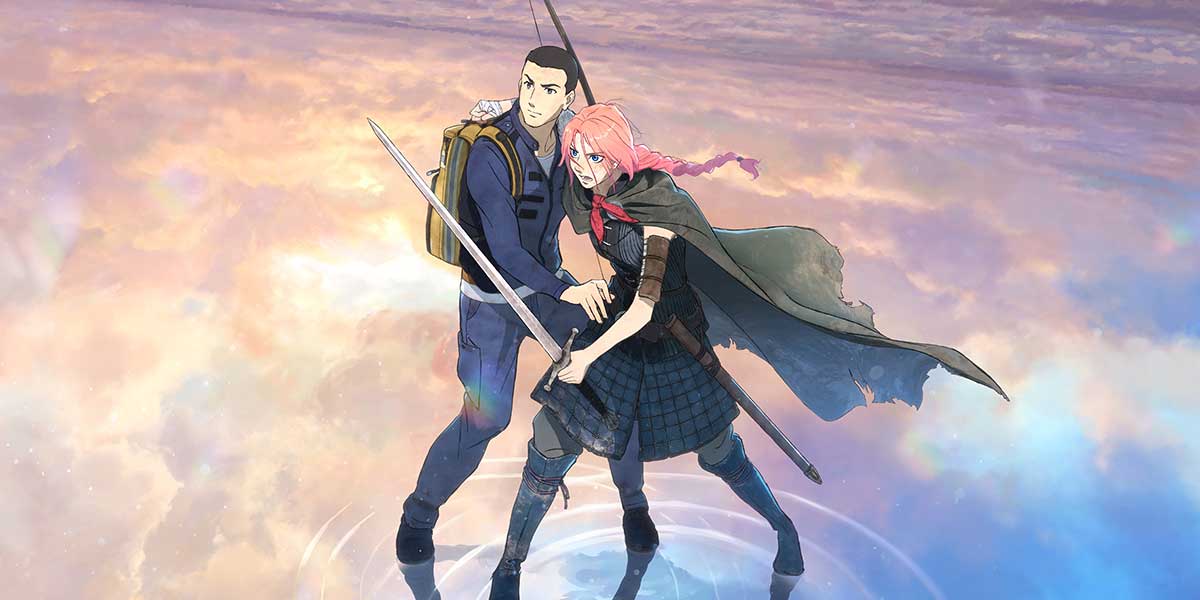
“Scarlet” (2025) Review
Director: Mamoru Hosoda Screenwriter: Mamoru Hosoda Cast: Mana Ashida, Masaki Okada, Koji Yakusho Distributor: Sony Pictures Classics Running Time: 111 min. MPAA: PG-13
There’s something very ambitious about a film trying to revise the story of Hamlet into more of a rejection of revenge than succumbing to its madness. Scarlet is a film that attempts to do just that through the fantastical staging of Japanese animation helmed by director Mamoru Hosoda. But, much like Hosoda’s previous films, Mirai and Belle, this film becomes so drowned in its own gorgeous animation that any thematic edge is reduced to the simplest platitudes about revenge being unfulfilling and peace being pretty cool.
The initial revisions are rather impressive, reframing Prince Hamlet as Princess Scarlet, bound by the same tragedy: her father’s murder by Claudius, who ascends to the throne. Where the play saves that poison-laced revenge for the end, this film starts from the moment of death. The soul of Scarlet descends into surreal purgatory, unbound by time but still dangerous enough to die forever. The souls that end up in this wasteland are given one last chance to achieve what they couldn’t in life. In this case, it’s Scarlet’s final opportunity to get revenge on Claudius with a sword instead of poison. How could she resist?
Of course, Scarlet’s journey through a land of murderous bandits and a lightning-wielding dragon must result in her not falling for the same hubris as Hamlet. Trying to steer Scarlet away from a life of sword-wielding slaughter is the modern paramedic Hijiri, struggling to recall how he died. While all Scarlet can do is kill, Hijiri is bound to saving lives, which he can apparently still perform in this purgatory. There’s a lot to work with there, especially with purgatory differing from reality with a different flavor of CGI that still looks gorgeous. Two souls from different eras would have plenty to discuss, but they seem to be too busy with the duties they’re used to. Even charming detours to villages of various cultures warrant little more than a few song-and-dance numbers. If you were hoping to see a dazzling redhead like Scarlet dancing in the city streets of Japan, you might be satisfied with the detail and camera work that went into that musical sequence. Don’t expect it to make much sense beyond a broader sensation of star-crossed friendships.
This is a maddening film for how beautiful it looks and how corny it is in framing its artifice. While I’m fine with the many details of this purgatory being deliberately vague, the ultimate resolution comes off more like a hollow public service announcement. Scarlet doesn’t just learn to reject the draining aspects of violence; she also aims to end all wars as her long-term goal. The film never works hard enough to make that desire feel more genuine, favoring dazzling sword-fight and Hawaiian dance sequences between the quest to defeat the evil Claudius. There’s also a thematic dissonance in how the film frames this story, when the most articulate scenes involve Scarlet shoving her swords into the genitals of her male enemies. For a movie that wants to extol the virtues of how spiritually draining it can be to kill, it sure does look like the violence seems reasonable, especially when she faces off against the bloody-thirsty and dopey depictions of Rosencrantz and Guildenstern.
Scarlet is an anime revision of Hamlet, too mesmerized by its own visuals to be a more fruitful story about rejecting revenge. While noble in its ambitions, the film never feels like it’s building toward its thesis, more distracted by detailed dances and grand battle sequences than ever able to say anything more profound with its retooling of Shakespeare, death, and violence. There’s a good message present, but a film with a good message has to be a good film first. And while Scarlet certainly looks the part, it stumbles with lukewarm resolutions for its grander themes that rarely feel as stunning as the sword fighting, dancing, and massive crowds. The technical prowess is more impressive than the film’s script, which has been an unfortunate trait of Mamoru Hosoda’s anime movies, ideal for eye candy but leaving little for the mind to munch on.




