
“The Samurai and the Prisoner” Review
Director: Kiyoshi Kurosawa Screenwriter: Kiyoshi Kurosawa Cast: Masahiro Motoki, Masaki Suda, Yuriko Yoshitaka, Munetaka Aoki Distributor: Janus Films Running Time: 147 min. MPAA: Not Rated
There’s an immediacy of intrigue in how The Samurai and the Prisoner mixes its 16th-century historical epic setting with the mystery of murders most foul. It’s a somewhat unexpected fusion from director Kiyoshi Kurosawa, who has experience in modern thrillers with his films Cure and Cloud. But his films also don’t feel like routine whodunnits, given their psychological focus on the ambiguous nature of humanity. While there are some murders to solve amid this period piece, Kurosawa makes this a far more engrossing tale for its centering on death, superstition, and the erosion of leadership when the chips are down and the body count rises.
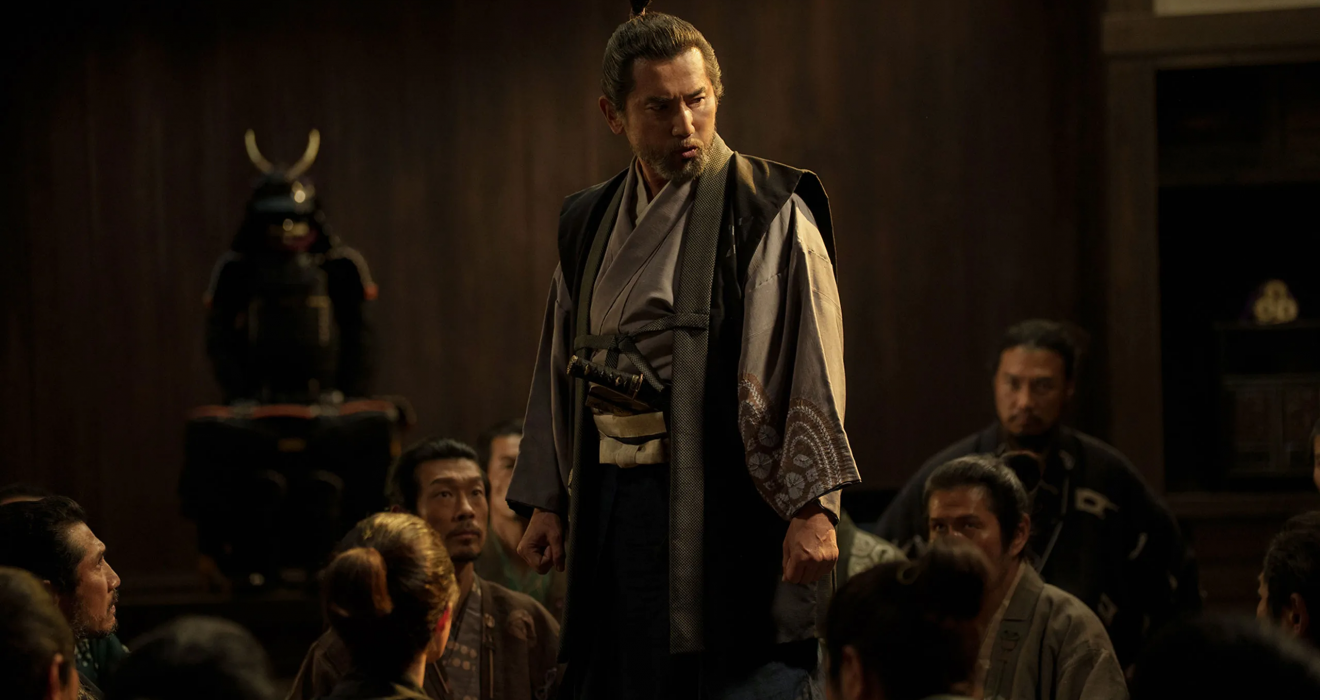
Lord Araki Murashige (Masahiro Motoki) is in a tough spot. While trying to defend his castle from the forces of warlord Oda Nobunaga, morale among his troops is lowering amid a strange series of murders. With no immediate culprit and elaborate means of execution, there’s a fear of divine intervention. Murashige has been defying the cultural and spiritual traditions that call for blood to be spilled. In the eyes of those who follow Buddhism or Christianity, this could be read as a sign that Murashige is tempting greater forces that threaten his rebellious clan.
The movie opens with his rule-breaking imprisonment of Kuroda Kanbei (Masaki Suda), a strategist sent by Oda to negotiate. Going against protocol, Murashige imprisons Kanbei. Realizing his absence will imply switching sides, Kanbei begs for death, which, once more, is a request Murashige denies. Clearly, Murashige has a history of violence he’d prefer to turn away from and reshape a world that doesn’t require further bloodshed. But Kanbei, ever the strategist, recognizes the flaws in this mindset and can better sniff out the mysterious murders that plague Murashige’s people. To keep his troops loyal and rallied, the wise words of Kanbei will be necessary to make a bloodless victory a reality.
As the first period piece for Kiyoshi Kurosawa, he weaves the genre remarkably well with a potent fusion of glorious locations and engrossing chamber drama. The film never gets too lost in the cinematography to linger extensively on pillow shots, nor does it become so engrossed in the mechanics of figuring out where an arrow went for a mysterious arrow murder. There is always a firm focus on the overarching fear of the supernatural, where spiritual taboos are being broken, and curses are being bestowed on those who rattle convention. The fear of the unknown is presented in a manner that is believable for deception, but frightening enough for the god-fearing forces of Murashige to think twice about the master they’re serving.
Masahiro Motoki’s performance is crucial for such a film to work, as he portrays a complex figure grappling with his own skepticism of Japan’s devotion to the divine and how best to make others see the light. He might debunk a few strange deaths, but it does little to stop them from coming or doubts within the religious. The frustrations in his voice and bitter realizations of conspiring forces make him an intriguing character worth following beyond whether or not he can solve the latest case. Masaki Suda has an ease to playing Kanbei as a man who uses Murashige’s desperation to play mind games, speaking more through clues and poems than direct accusations. The dynamic between the two works so well because they’re not so much a mystery-solving duo as they are two men trying to make sense of a world that is beholden to questionable compromises.
The internal conflict extends beyond whether or not Murashige is capable of winning the war he started. The Saika and Takatsuki Clan are on opposite sides of the religious aisle, with the Buddhist favoring of Saika Magoroku (Kiyohiko Shibukawa) and the Christ-believing Takayama Dario (Ikkei Watanabe). Along with the murders, odd occurrences of decapitated heads being distorted and strikes of lightning have them conflicted about whether or not they’re following a dark path. Even with the devotion of Murashige’s devoted wife Chiyoho (Yuriko Yoshitaka), the doubt still grows in Murashige as trust erodes within his castle walls.
With deeper questioning of culture and devotion, The Samurai and the Prisoner sticks out as far more than a stirring dose of a Japanese historical epic. Kiyoshi Kurosawa has said that a big inspiration for the movie was Akira Kurosawa’s Throne of Blood, arguably one of his most engrossing period pieces for mixing thrilling action with Shakespearean drama. Akira Kurosawa was also notable for being capable of far more than samurai films, delivering just as much excitement in modern dramas like High & Low and Ikiru. It’s safe to say that Kiyoshi Kurosawa is in that same realm of direction, able to step into any genre or time with the confidence to compose a masterful piece of filmmaking.
