
“Making Marie Antoinette” Review
Director: Eleanor Coppola Cast: Sofia Coppola. Diane Lane Distributor: Mubi Running Time: 87 min. MPAA: NR
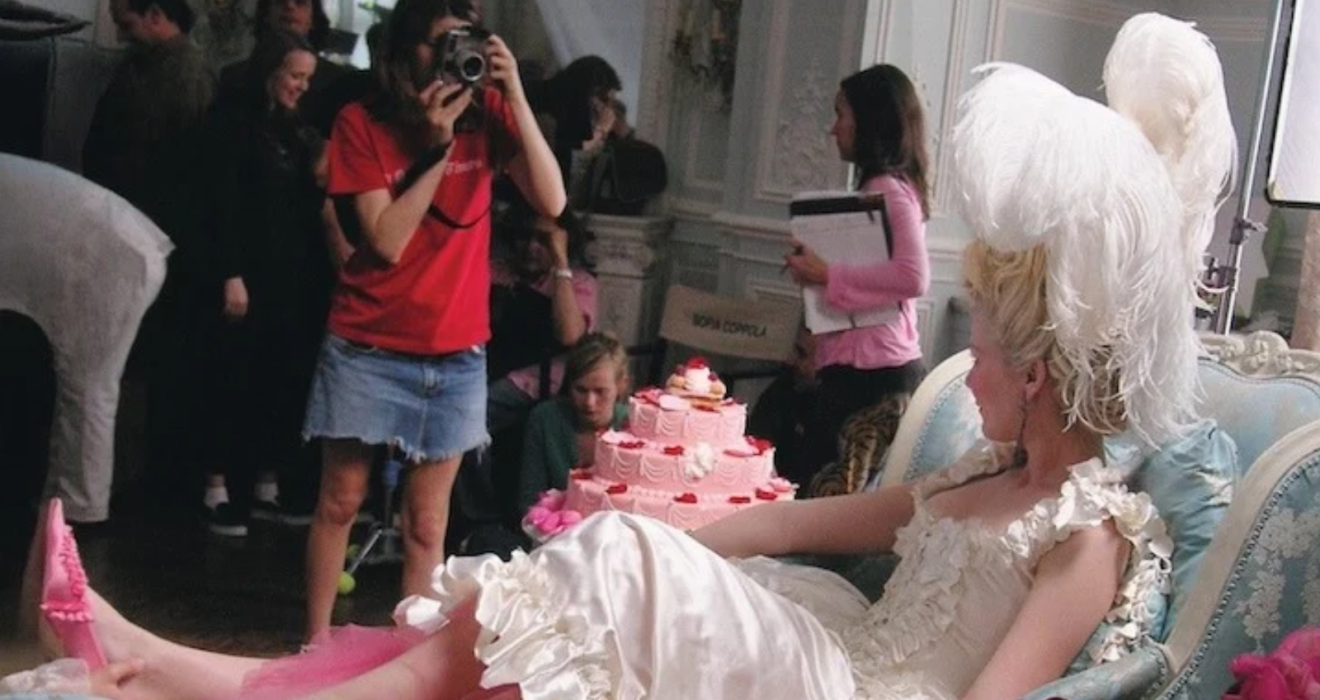
Sometimes the making of a movie is far more compelling than the movie itself. Sofia Coppola’s Marie Antoinette is a perfect example, especially after seeing the recently unearthed footage for Making Marie Antoinette. I didn’t find Marie Antoinette as compelling as her previous award-winning picture, Lost in Translation, but it still had incredible production values that would make for an exciting experience. And since we can’t travel back in time to 2005 to hang out with Sofia in Italy, this documentary is the closest we’ll get to knowing what it was like on set.
I was apprehensive at first about this film, considering it was shot by and features written passages from the late Eleanor Coppola, Sofia’s mother. It would be so easy for this candid voyage to become sentimental amid its nepotism, given that Sofia’s accomplished father, Francis, drops by the set as well. But as the most famous Coppola notes with his visit, he’s relieved not to be directing, recognizing that this is his daughter’s project. The same approach shows up in Eleanor’s coverage, given her filmmaking experience, ensuring this won’t be just a flowery family portrait. She didn’t hold back in examining her husband’s work through Hearts of Darkness: A Filmmaker’s Apocalypse, and she didn’t go soft or harsh in documenting her daughter. She’s keen to capture the most interesting aspects of the filmmaking process, highlighting the joys of a good shoot and the anxieties of going further into the night than expected.
True, there are some amazing sights to see in the locations that Sofia shoots and the many period-accurate costumes she adorns her actors with. But the more compelling angle is how Eleanor takes moments to bask in the enormity of the project and consider what she is shooting. She considers what makes good documentary footage and how the best scenes to capture often aren’t something you can plan for. You point, shoot, and hope something interesting shows up, which may or may not be up to the filmmaker. Of course, Eleanor isn’t completely objective here, and it would be ridiculous to assume she wouldn’t highlight the passage of time she’s experienced. What parent wouldn’t want to harp on the time they watched their young daughter cavorting on the set of Apocalypse Now to helming their own movie? A mother is allowed to be proud of her daughter, but she thankfully doesn’t reduce it to embarassing her with stories of her youth. That version of her daughter is in the past, and she’s willing to recognize where she ended up as an adult. One can only imagine the strange feelings she had going through these 80 hours of footage again over a decade later.
Eleanor’s words, delivered through Diane Lane’s beautiful narration, paint a more thoughtful portrait of this production that goes beyond the film’s making. On a technical level, it is fascinating to watch Sofia at work and how she directs. Nothing in what’s revealed is all that scandalous, with actors like Kirsten Dunst and Jason Schwartzman seeming to roll with whatever Sofia wants and have a good time. Maybe the most shocking mistake on set is when a tired Sofia drops her food on the floor amid late-night filming with an exhausted crew. I’m sure the film would’ve been juicier had there been more on-set fights or disputes about the creative material, but the thoughtful approach for Eleanor, highlighting the connection her daughter made, made this documentary far more engrossing. This family’s emotional resonance never feels like a smug sense of self-satisfaction about how far they’ve come. They accept and drink in these wonderful moments before they’re gone, made all the more bittersweet because this is Eleanor’s final project before her death.
Making Marie Antoinette is equal parts behind-the-scenes fascination and an emotional mother-daughter journey. Fond memories of Sofia and a somber farewell to Eleanor make this collaboration between the Coppoalas a beautiful documentary that explores more than most about filmmaking. It always seems like the best examples of this subgenre are the ones that unearth something that went wrong, spanning from Overnight (The Boondock Saints) to Lost Soul: The Doomed Journey of Richard Stanley’s Island of Dr. Moreau (The Island of Dr. Moreau). Eleanor’s films remind us that when film production mostly goes to plan, something more than relief is present and something beautiful worth celebrating.