
“Atropia” Review
Director: Hailey Gates Screenwriter: Hailey Gates Cast: Alia Shawkat, Callum Turner, Zahra Alzubaidi, Tony Shawkat, Jane Levy, Tim Heidecker, Lola Kirke, Chloë Sevigny Distributor: Vertical Running Time: 103 min. MPAA: R
The military-industrial complex is such a mess that trying to frame satire around it is a tall order. This is the conundrum that faces Atropia, posed as a satire of a post-9/11 world that struggles to find the right words in conveying how messed up the 2000s really were. There are concerns about why we shouldn’t be sending troops into a pointless war, and the Islamophobia that came with this era. But any greater tapping of the dread, paranoia, and exhaustion in this era of rampant jingoism gets lost in the shuffle of low-key quirks and offbeat relationships.
Consider how the film opens with a dramatic Middle Eastern setting of American troops failing to handle a terrorist attack. The camera pulls back to reveal that Fayruz (Alia Shawkat) isn’t mourning the loss of a fellow villager, but rehearsing for the arriving soldiers and maybe a talent scout to get her a better gig. She describes herself to the other actors as an authentic Iraqi actress because she grew up in Iraq, but it’s a lie. However, when she later reveals this secret, there’s very little surprise from her co-workers, who are not Iraqi but are just non-white enough for the roles. In a box where everyone is playing pretend and not being themselves, such revelations feel as mundane as the routine of staging Atropia’s fictional setting.
There’s a lot of effort put into the staging of Atropia, showcased and spoken of with as much depth as Wes Anderson’s submarine in The Life Aquatic or the hotel from The Grand Budapest Hotel. But while Anderson found some quirks in these scenarios, there’s tedium to how the film keeps bringing up the special effects used to make Atropia smell like burning flesh. The assortment of rubber limbs, fake blood, and pyrotechnics becomes so commonplace that there isn’t much humor to be had in the deadpan questioning of how to perform a death or how much blood is enough to make an accurate-looking news report. Even the twist of one of the characters being pregnant feels far too casual for the rather gross manner in which it’s discovered.
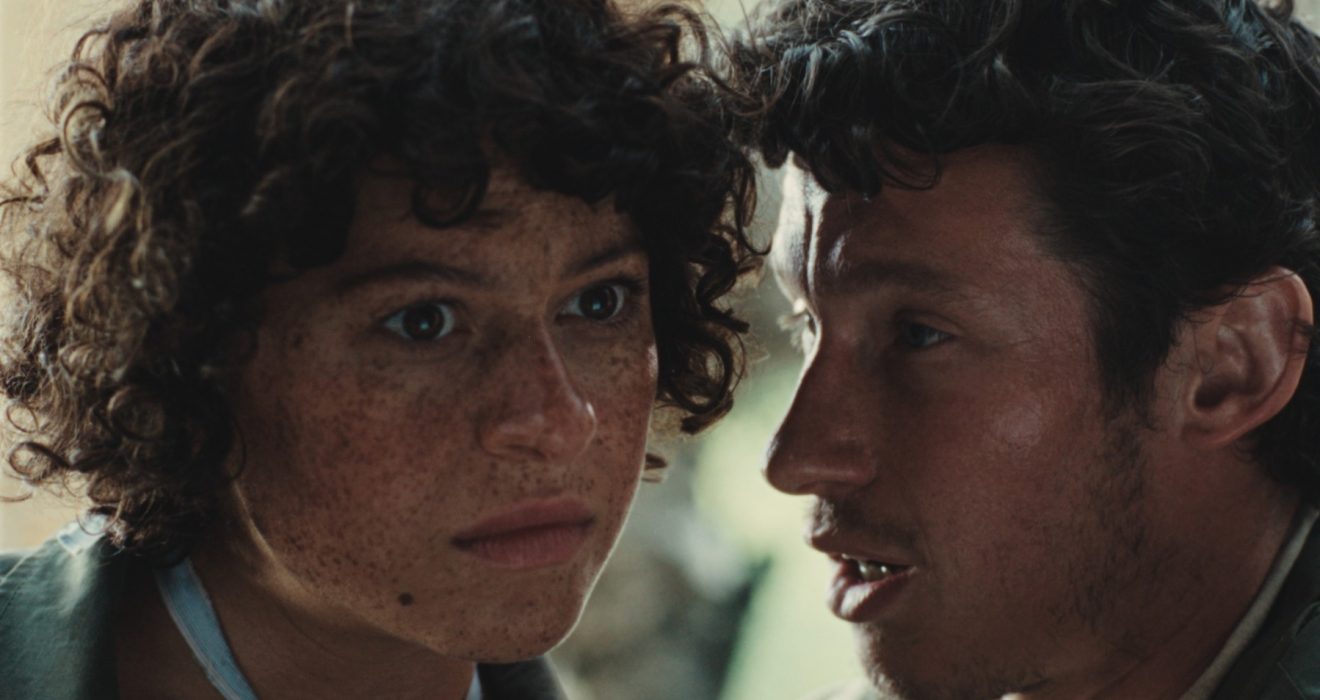
The greater absurdity in all this is that there isn’t much of anything going on in Atropia that is going to prepare the troops for Iraq. It’s a notion that always feels a little too far beneath the surface, as the film focuses on the romance between Fayruz and the soldier Abu Dice (Callum Turner). Initially, Fayruz uses Dice to get herself front and center with Hollywood talent, such as a visiting actor played by Channing Tatum. But when this effort fails, the two fall for each other, given there isn’t much else going on between following orders and taking stage direction. They have some cute chemistry, but it always feels at odds with the satire of war, as it falls back on clichés while the story simultaneously tries to subvert stereotypes of the war on terror. Fayruz and Dice deserve better, but the only thing more tragic than their somewhat star-crossed romance is that their heads are still slightly engulfed in the patriotism Kool-Aid, having some faith that this set of future Jarhead sequels will pay off for them in some way. Even the supporting roles for Tim Heidecker and Chloë Sevigny are reduced to punchlines far too simple for a scenario like this.
There’s wasted potential in how Atropia tries and fails to address the theatrics of war, more content to swoon with its own quirks than shoot at its targets. For a story set two decades apart from the era of unhinged patriotism following terrorism, this movie still seems to be lost in the haze of that era, as though the smoke never cleared and we’re still trying to find what went wrong. And if you can’t do that, you might as well hook up in between.