
“Friendship” Review
Director: Andrew DeYoung Screenwriter: Andrew DeYoung Cast: Tim Robinson, Kate Mara, Jack Dylan Grazer, Paul Rudd Distributor: A24 Running Time: 101 min. MPAA: R
Insecurity is the key to why Tim Robinson’s comedy works so well. On his sketch comedy show, I Think You Should Leave, his many skits have become evergreen humor about existential dread and social acceptance, appealing most to millennials. Friendship takes this general concept and blows it up into a film that is as awkwardly amusing as it is tragically about the turmoils that come with modern male friendships. There’s always a darkness amid the absurdity where you have to laugh at Tim’s inability to fit social situations and then dread you’re one mistake away from being that bad.
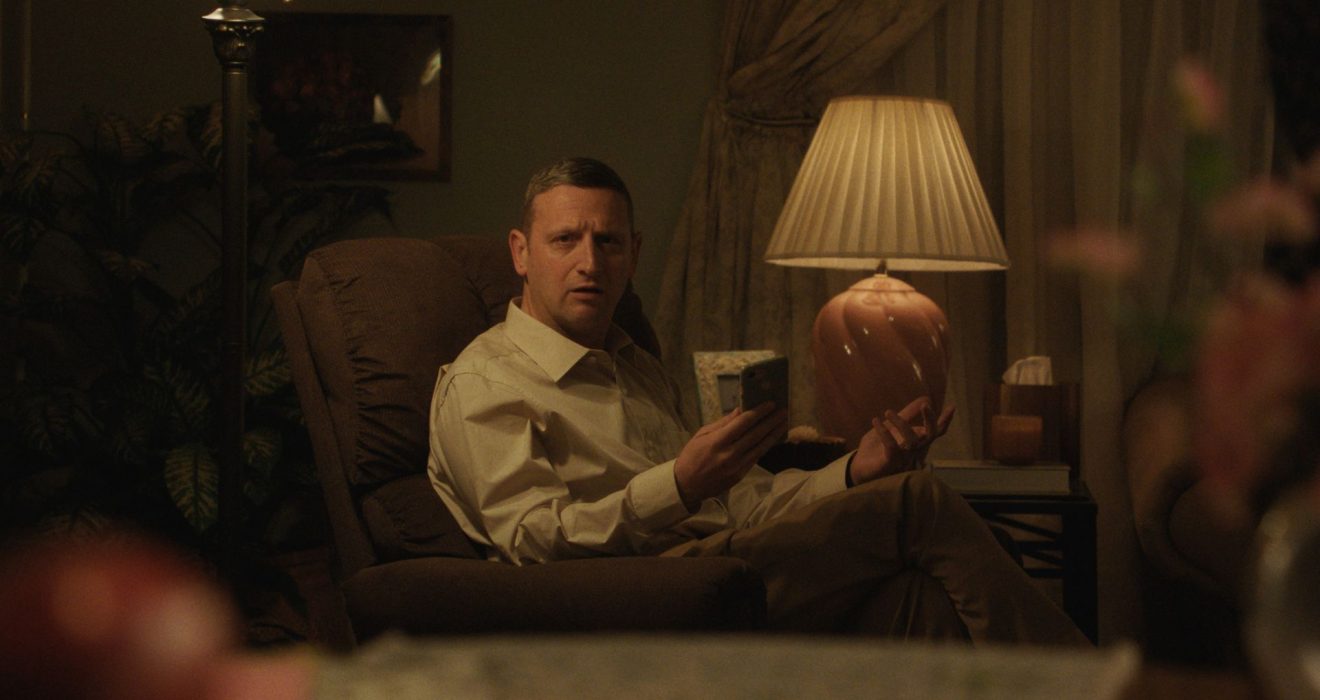
The film finds Robinson playing the husband/father Craig Waterman, a man struggling to relate to anyone and trying his best to ward off a lingering fear that his wife (Kate Mara) will ditch him after her cancer recovery, while his teenage son (Jack Dylan Grazer) grows distant and uninterested. The neighbor, a local TV weatherman, Austin (Paul Rudd), provides a bright light blazing through the suburban haze. He invites Craig for a beer and exposes him to another world of ancient artifacts, mushroom hunting, and sneaky paths through sewers. There’s an exhilaration in how easily Craig could make a friend.
The problem is that a friend who arrives easily can also go easily. All it takes is one mistake, such as horsing around with Austin’s friends, for that relationship to crumble. The hope of a male bond is obliterated instantly, a tragic realization that leads Craig to confess to Austin that he couldn’t accept him so quickly. All the dominoes start falling as attempts to recreate the bonding and maintain personal and professional relationships take a tumble. It’s a bitter realization that Robinson approaches with his trademark humor of odd looks, awkward jokes, and loud blustering.
Friendship is a mixture of humor and tragedy. The bulk of the humor comes from Craig’s inability to address the brick wall he has built up for himself. Like most men, he wants a comfortable level with a connection that isn’t too difficult to navigate. This is signalled through his drug trip, during which he hallucinates ordering a sandwich from Austin at a restaurant. The conversation is sweet and straightforward, with no chance of the transaction failing, and smiles are exchanged as easily as cash. Yet all Craig took away from that moment was that it was just a sandwich order. It’s not about the food, making me cry at the obviousness and laugh at the obliviousness.
Fans of I Think You Should Leave should probably be warned that Tim’s existentially laced comedy lingers on the awkwardness longer to better explore the darkness of men struggling for companionship, without an abrupt cut to dump the bit when it’s exhausted. That’s refreshing, considering that such a topic shouldn’t feel like a series of punchlines that either rely on comforting levity or on easy satire that highlights standard components of toxic masculinity. A vulnerability is explored in how Craig and Austin find common ground as bricks from their respective walls begin to shatter. There’s a desire for men to see each other for all the problems they themselves won’t even admit to the most present company. The anxiety of baring it all is presented in the form of the walls that society has built, even barked at by the inclusion of Conner O’Malley playing the obligatory loud jerk to punch Craig back into his hole, where all Tim Robinson can do is scream back into the void, “WHO ARE YOU!?”
Friendship is frighteningly funny in how it finds the absurd and earnestness of male friendships. This weird little dark comedy explores a profound psychological and even spiritual longing that taps into something relatable and tragic. All the pressures of wanting to fit in breed a stress that men feel they’re doomed to their castles of solitude, walled with a silence that remains out of fear of the judgment that can ruin everything by one mistake or revelation. And in that darkness, Tim Robinson brings a little levity by remarking, “Who said that?” in his silly voice, an assurance that we’re not all alone in this catharsis.