
“La Grazia” Review
Director: Paolo Sorrentino Screenwriter: Paolo Sorrentino Cast: Toni Servillo, Anna Ferzetti, Massimo Venturiello Distributor: Mubi Running Time: 133 min. MPAA: R
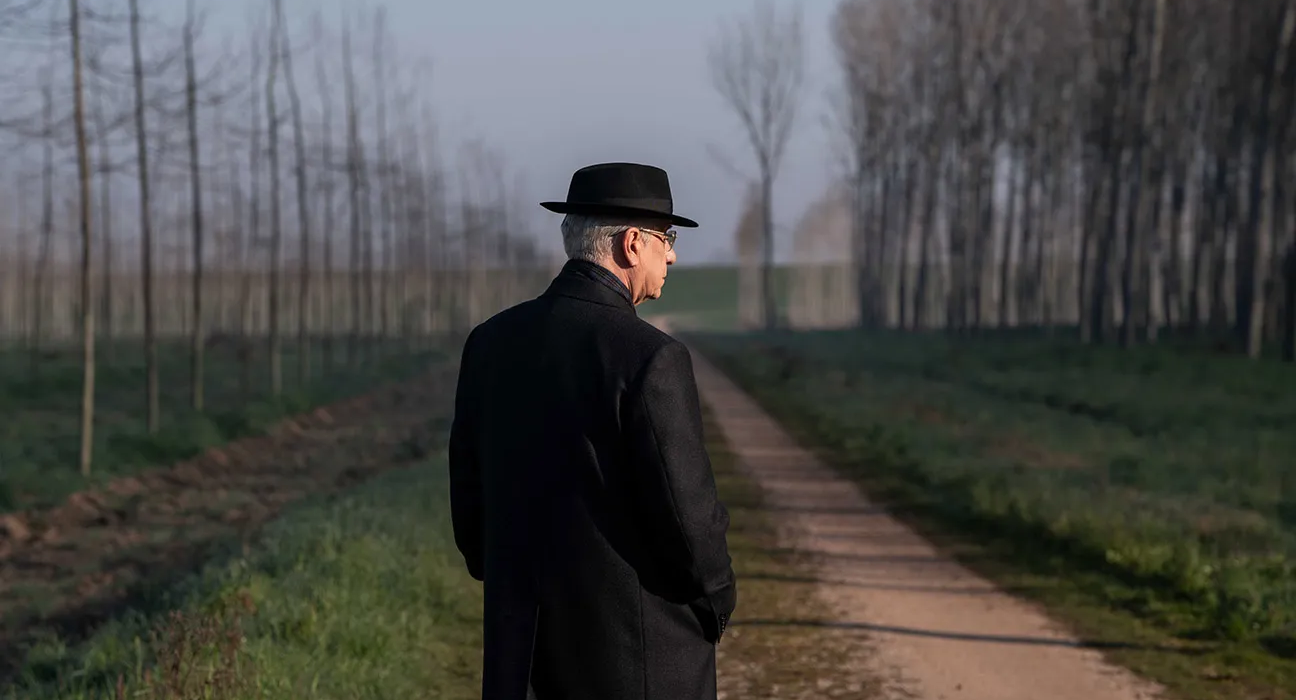
Italian President Mariano De Santis (Toni Servillo) has been nicknamed “Reinforced Concrete.” The name reflects how immovable he is due to his indecisiveness. La Grazia (Italian for “The Pardon”) finds Mariano at the tail-end of his career, trying to grapple with the regret of a life less lived. Although he’s granted an opportunity to do so with a few final actions, there’s the lingering notion that it’s too little too late. By that same token, this is a film too muted to find its groove of personal and political contemplation.
There’s a discomforting quiet to how Mariano De Santis deals with his twilight years. He retreats to the roof to smoke a cigarette and grieve for his wife, speaking internally about his uncertainty. It was not exactly an honest relationship, as De Santis had speculated that she had cheated on him for years, still unsure who among his circle was having an affair. It might be his associate, Ugo (Massimo Venturiello), a politician aiming to take the Presidential seat once De Santis departs. More knowledge of the affair might be Coco, a motor-mouthed woman who seems to talk about everything except the cheating culprit. That window of closure may be closing soon.
At the same time, De Santis is given one last chance to make a few critical political decisions. A bill legalizing euthanasia has him debating whether or not he should sign it into law. The stance by the Pope (Rufin Doh Zeyenouin) is an expected denial of ending life. Making a more compelling argument is De Santis’s daughter, Dorotea (Anna Ferzetti). Given her experience with the law, Dorotea makes the best case for euthanasia, stressing that individuals should be more in control of their lives. It’s an aspect that continues to haunt De Santis, echoing in his head as he weighs his final moves.
Director Paolo Sorrentino tends to get lost in his film that favors a grace so muted that it hardly has a voice. Scenes of De Santis obsessing over rap beats and the freedom of space flight do little more than break the monotony of debates on freedom and death. Mortality would seem to be a juicier subject in how it continues to plague the President in various ways, from a dying horse to a murderer awaiting a pardon. But there’s an almost annoying quaintness to how refined De Santis becomes in his deeper questioning. Several scenes feature him simply vibing to rap music or the smoke on the roof, hoping some greater answer will arise from his subconscious. I suppose I shouldn’t have expected much of that, considering how Dorotea admits to shielding her father from triggering information that would awaken something within him.
The doldrums of this President’s final hour remain in a frustratingly silenced prison, starkly contrasting Sorrentino’s usual flair. For a film about a President with a cheating wife, an existential crisis, a murder pardon to consider, and a controversial bill to sign, it remains locked in a realm of gruelling stiffness, trying to stay so dignifiedly stern it’s maddening. The punctuation of some scenes with rap lyrics, techno music, and dance numbers feels more like jolts from the political stuffiness than a sprinkling of the modern. The bulk of the film finds the President stewing in his own uncertainty, living up to his indecisive legacy far too well.
La Grazia is a political drama with little heft, even for a film about a tired, unsure Presidential figure. It’s almost fantastical how Paolo Sorrentino favors a tale of a political player so boring that his biggest sin seems to be his inability to choose. Toni Servillo’s performance works well for this type of character, but it seems to almost amble about what to do before and after stepping down from his position. It’s an acceptance of finality so quietly casual that it might as well be a low-key funeral, burying this President in a longing for dreams rather than a reflection of regret, where his greater desires seem too muffled by political paperwork and firm-fitting suits.