
“Resurrection” (2025) Review
Director: Bi Gan Screenwriter: Bi Gan, Zhai Xiaohui Cast: Jackson Yee, Shu Qi, Mark Chao, Li Gengxi, Huang Jue, Chen Yongzhong Distributor: Janus Films Running Time: 156 min. MPAA: Not Rated
Bi Gan’s Resurrection is a film that doesn’t so much try to decipher humanity’s existence as swim through its mysterious waters. There’s a scene where a child asks an adult what the sea is like. When the adult gives the simple answer that it is blue, the child corrects him, pointing out that the color is merely a refraction of light. That same sensation is applied to this film’s mesmerizing approach to understanding dreams and what it truly means to be human, never reducing that search for meaning to simple platitudes of compassion and legacy. There must be more to life than that, and Bi Gan indulges that philosophically thirsty audience with a journey into the soul and mind as boundless as exploring the depths of outer space.
There’s an eerie quality to the movie’s framing device of a future where people live longer but cannot dream. A sacrifice has been made where our capacity for imagination and a wandering mind have been drained of a continued existence. Among the dreamless are Deliriants, those with the capacity to still dream but decay faster. With one Deliriant (Jackson Yee) being at death’s door, the sympathetic Miss Shu grants him a last meal of cinema by installing a projector inside his body. Through the many filmed stories, the Deliriant is granted an anthology of sensations to experience before departing from this world. One can’t help but see themselves as the Deliriant in that moment, and the reflections don’t end there.
The many stories experienced by the Deliriant, which also stars Jackson Yee in lead roles, are all over the map in their attempts to capture the key ingredients of Buddhist thought. Sound, for example, plays a major role for a commander (Mark Chao) trying to unravel a murder in the 1950s, where he encounters a theremin inside a suitcase and a knife to the ear. Spirituality is touched on in a quietly haunting manner in the story of an art thief who encounters the chatty Spirit of Bitterness (Chen Yongzhong). The supernatural even takes on a more chaotic form for the 1999 story, featuring the trouble-making Apollo falling in love with the vampire singer, Tai Zhaomei (Li Gengxi). Throughout all the stories is a constant reminder of life’s evaporating nature, where the Deliriant might be experiencing the lives of many, but the wax on this lit candle is still melting. We are not immortal, no matter how many lifetimes we get to experience on the big screen.
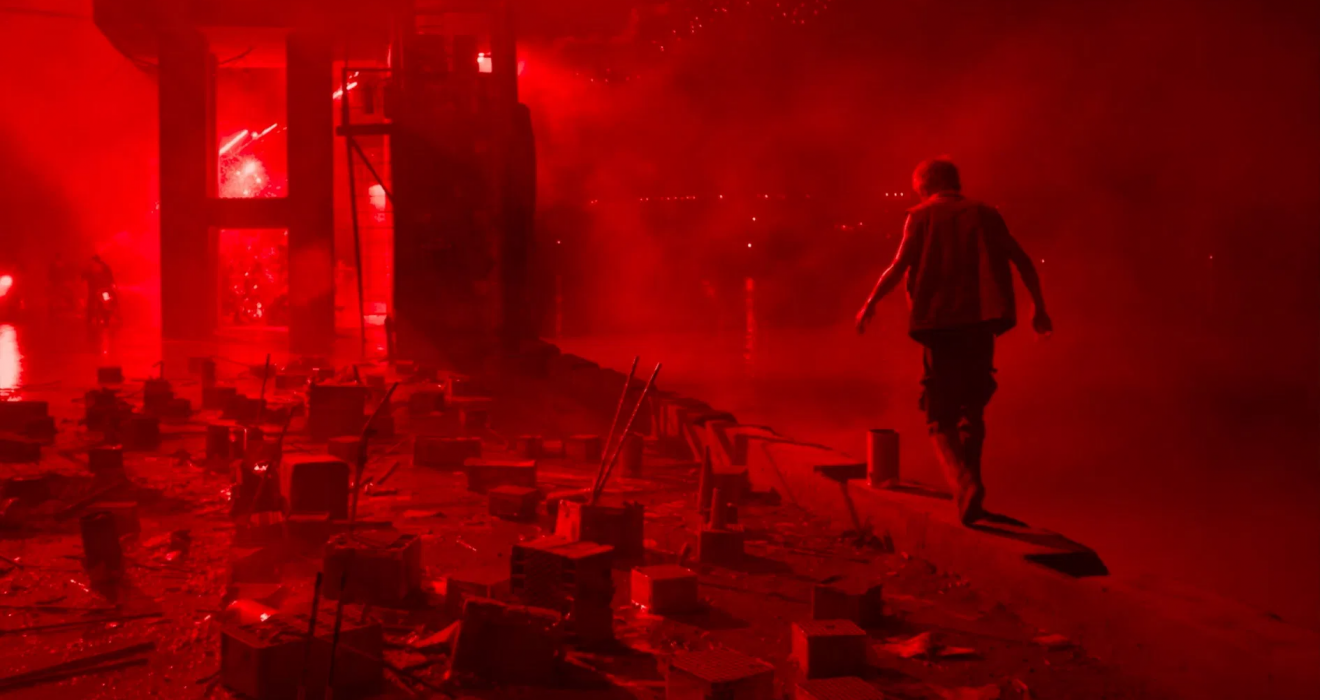
Bi Gan’s direction dabbles in various styles that are always exciting to watch unfold with each entry. The tone can shift greatly from the quiet con job of Jia’s scheme involving smelling cards to the violent scuffles of Apollo duking it out in a karaoke bar. The camera work spans from the woozy transitions of communicating with a spirit to the directly engaging unbroken shots of following the sinister Mr. Luo (Huang Jue) through the streets of a port city. Even the futuristic bookending segments of the Delirant are presented with silent-movie title cards. The dipping in and out of various shots, genres, and colors has an all-encompassing appeal of a film trying to encapsulate all of life’s wonder, passion, heartache, and pain. That’s a tall order, but a movie like this works by never trying to close that box, leaving it open enough for the mysteries of life to remain fascinatingly aloof and ever-present.
What fascinated me so much about Resurrection is how it touches on one of the most remarkable powers of film: the empathetic ability to step out of our own shoes and into someone else’s life. Getting lost in a story that is uniquely different from our own perspective on life can be a fulfilling experience. We are the Deliriant, placing ourselves in these dreams of the big screen. There’s nothing more satisfying than leaving the theater and feeling as though you’ve been to another planet for the past few hours. I’ve experienced this a few times with films like Princess Mononoke and Blade Runner, and Resurrection now joins those ranks, but for being more knowledgeable of the experience being portrayed. The finale features a chilling yet clever reframing, as the ending title card plays over a theater where the patrons slowly disappear, and the theater progressively decays. That out-of-body experience takes on another level of witnessing this reflection of the audience, where the mind lingers on how many movies you’ve seen, how many you’ll remember, and how that theater where you saw those most memorable films is long gone.
Resurrection is one of the most mesmerizing and transcendent works of filmmaking I’ve ever seen. It reaches deep into the appeal of cinema itself and uses it to explore the depths of the human soul with a poetic beauty that still leaves room for the unknown. It’s a masterpiece from Bi Gan that feels like a final film festival for the mind, indulging in the power of movies that can shape our dreams. While the Deliriant and the audience may not be experiencing a resurrection when we watch these many stylish and meditative stories unfold, it sure feels like we’re being carried into a sublime form of dream-like voyeurism, with all the sensations that come with delving into these different lives. That’s all we really want from movies and life in general: to feel something, and Bi Gan just gave us a buffet of those many feelings.