
“Videoheaven” Review
Director: Alex Ross Perry Screenwriter: Alex Ross Perry Cast: Maya Hawke Distributor: Cinema Conservancy Running Time: 173 min. MPAA: Not Rated
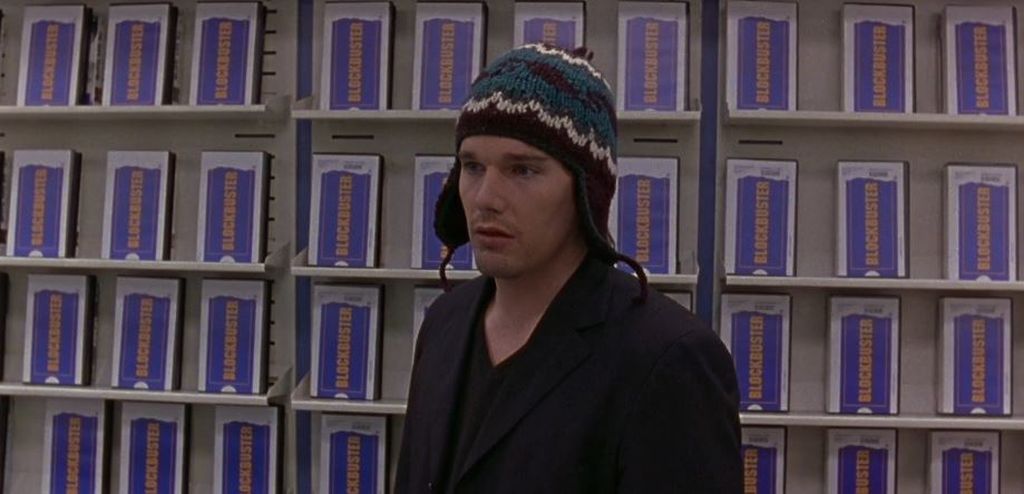
The video store is gone. An entire generation will grow up not knowing about the thrill of Friday night rentals, the anxiety of a movie being out of stock, and the musty smell of plastic VHS boxes lining shelves. I’ve come to terms with this passage of time, but how history will be recalled is something worth noting. That generation that never knew the age of the local rental shop around the corner or the Blockbuster Video on every corner will only learn through our words and the media we craft around the ancient retail shops. That is what is at the heart of Videoheaven, a documentary that aims its sights far grander than mere recitations of the history most of us know.
Alex Ross Perry wisely focuses on how movies of the past and present have preserved the idea of video stores in ways that are both revealing and romanticized. Maya Hawke’s gentle narration crafts a more thoughtful history beyond the game of Where’s Waldo, one to be played with movies that feature video stores in the foreground and background. Connections are drawn between the video store’s presentation within movies amid the shifting of this industry, and the way local stores in the 1980s were swallowed up by corporate giants in the 1990s. It’s sometimes as subtle as the visibility of the store and sometimes as overt as the opening scene from The Toxic Avenger Part III: The Last Temptation of Toxie, where the hero must stop the villains from reducing a video store’s selection to mainstream titles. For as many fond memories as there were of the video stores, there was also a battle being waged before the younger millennials settled for the monoculture of Blockbuster Video and Hollywood Video.
There’s a confounding element in how Perry’s lengthy essay addresses the distortion of history and frames the video store clerk as arrogant, adding to the social anxieties that accompany visiting the establishment. This is not to say there were no snooty film snobs or apathetic Gen-Xers behind the counter, but that personality became the most common portrayal. Once more, the movies will shape future generations, and a specific portrait will be painted with the casual cynicism of Clerks or the pimply pomposity of Stranger Things. As someone who worked at a video store, I never let my disdain for customers show in displays of frustration or insults. Watching Clerks again with this profession felt like a relatable yet guilty dose of wish fulfillment, while watching Stranger Things after the fact felt like a cartoonish distortion, painting a picture of a past more fantastical than accurate.
Perry’s words are still loaded with deeper insight when addressing the last grand appearance of a video store in 2007’s I Am Legend. There’s a lot to take in with the scene where an isolated Robert recreates the video store experience with mannequins in a barren Manhattan. The scene is a lot to take in, for both the dated nature of the fact that video stores no longer exist and the realization that recreating the experience can only now be conveyed through a simulacrum. Just this year, a video game was released that lets you work in a video store. The customers are not real, just as the mannequins won’t truly interact with Robert. But much like Robert, part of us longs for that routine more for connection than for convenience. The documentary also considers parallels with the older film The Omega Man, in which a movie theater is used for entertainment rather than a video store. When the world ends, there won’t be a Netflix or Prime Video to access anymore.
Far more than nostalgia, Videoheaven is one of the most engrossing and inquisitive documentaries on video stores. That might not sound like a high bar, given the lackluster revival story of Kim’s Video and the uneven recollection of talking heads in The Last Blockbuster, but it’s still a worthy endeavor. It’s impressive that a mere video essay, drawing on three hours of movie clips, could offer up so much more than a collective of millennials and Gen-X getting all giddy about their memories while trying to be more honest, struggling to dislodge those rose-colored glasses we’re not quite ready to break. While the film does tend to meander in its poetics of time long past, there’s an invaluable sense of blending genuine emotion with earnest history. It’s a better encapsulation of the video store era, rather than repeating the same stories we all had in childhood and doing little more than reflecting and repeating. Anybody my age can easily convey the rental experience, but only someone as thoughtful as Perry explores that grandiose sans the pretention. We’ll never have the video store again, and we may never see a documentary this good on the topic.