
“California Scenario” Review
Director: James Takata Screenwriter: Dara Resnik, James Takata Cast: Will Yun Lee, Abby Miller, Jon Huertas, Brooklynn Prince, Minnie Mills, Jes Macallan, James Saito, Jean Yoon, Ellen Greene Running Time: 99 min. MPAA: Not Rated
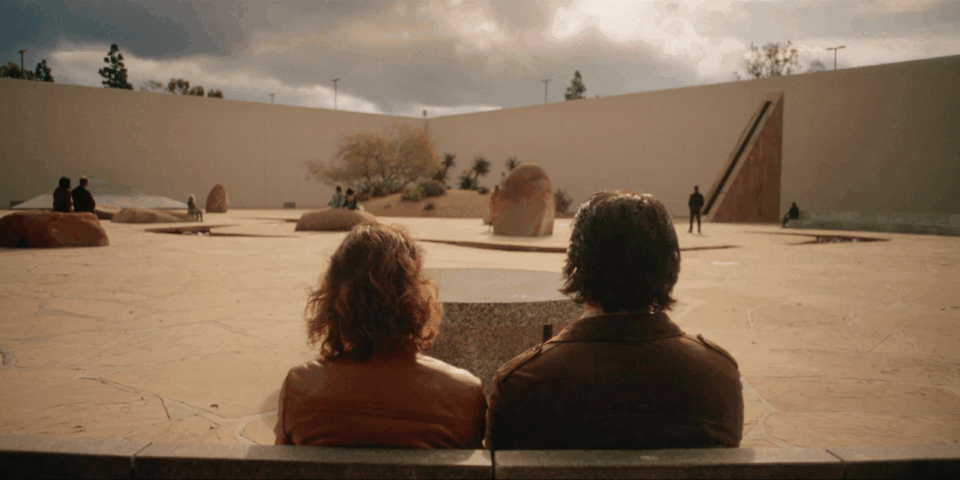
The staging of California Scenario reminded me of Woody Allen’s Scenes from a Mall, where a specific location is as much a setting as a character. But while Allen’s film was a lackluster comedy that never took off in its mall setting, this movie uses Isamu Noguchi’s sculpture garden, which hardly enhances the family drama. The attempt to place a more tactile face on trauma and resolve is an admirable one, but it doesn’t connect all that well, becoming a dysfunctional tapestry of dysfunctional people.
The characters themselves are unique in their situations if not in their discussions. Laura Acker is in a tough situation, having gotten out of an abusive marriage and struggling to find ways to approach her destructive daughter. Jacob Hara also tries to comfort his daughter, but keeps getting pushed away despite the parental urge to be present and helpful. As the two struggle to mend the connections that have rotted with painful silence, the dark cloud of the Holocaust and Japanese American internment looms over their lives, dripping in bad memories of the past that threaten to downpour in the present. All of this culminates with a resolution found at the aforementioned sculpture garden, going so far as to use the very exhibit to make the thesis crystal clear.
There’s certainly a cerebral thirst in how this film wants to delve deeper into the psychological scars left by past atrocities, which threaten to bubble up for the next generation. Steering towards the more personal effects than the grander societal implications of a resurgence in racism and cropping up of concentration was structurally a good call. It’s a little hard to find the family warmth this film was aiming for when confronting such monumental threats, but showing kindness for a suicidal daughter, the mental price for an open relationship, and trying to shake off the overprotective dad vibes are comparatively not as intimidating. There are a handful of scenes that come close to finding that sweet spot of genuine human connection that every family struggles to seek.
Where the film falls short is in the comedic breaths it takes between the somber addressments of history forgotten and eroding family. A joke about how a Jewish woman was mistakenly called a “Nazi” when somebody said the words “not see” is drawn out far too long for an absurd back-and-forth that wasn’t all that funny to begin with. Generational jokes about how problematic it is to call someone autistic fall so short that the awkward nature of these arguments comes off more tedious than enduring. Moments like these make the character come off less like human beings struggling with familiar feelings and more like vessels for handling divorce, self-harm, and unfaithfulness.
California Scenario is undeniably heartfelt, but it has too much on its plate to ever feel emotionally satisfying. In trying to tackle a history of hate, wounds both literal and psychological, and the human connections we all hold, the whole experience comes off like a series of decent scenes that don’t quite add up to a profoundly moving picture. Much like the characters converging in the climax, it felt like a casual stroll through the park of the artistically and emotionally familiar, sometimes slowing down to appreciate the details, but not for long, with a pace that tries to cover so much ground.