
“Hoppers” Review
Director: Daniel Chong Screenwriter: Jesse Andrews Cast: Piper Curda, Bobby Moynihan, Jon Hamm, Kathy Najimy, Dave Franco Distributor: Walt Disney Studios Motion Pictures Running Time: 104 min. MPAA: PG
Hoppers seems like the type of animated movie that would write itself. In the early exposition of explaining robot animals used to study animal habits, the inquisitive Mabel (Piper Curda) remarks that this is just like Avatar. Her professor mentor bites back that this is nothing like Avatar, and she’s thankfully right. This is not a film where environmentalism is sold as simplistically as an episode of Captain Planet, favoring a more complex conflict akin to Princess Mononoke. It’s a daring plot that still retains the razor-sharp wit of Pixar’s best productions.
The early scenes do a good job of suggesting something bigger. A young Mabel learns to appreciate nature through her grandmother’s wise words amid the peaceful glade of her estate, recognizing that she is part of something so grand, if you can take in the details of life itself. Time passes, as does the grandmother, and a grown-up Mabel becomes dedicated to preserving the glade being targeted for demolition. Her opponent is the mayor, Jerry Generazzo (Jon Hamm), who takes little interest in environmentalism, but his construction through the glade is hard to rebuke, given the area’s lack of wildlife. Mabel’s only hope to keep the glade free of a freeway is to lure a beaver back to this area. Her professor, Doctor Farifax (Kathy Najimy), has developed a technology that uses robot beavers piloted by a human mind to better understand wildlife, which might be the perfect way to find the missing mammals and restore the glade.
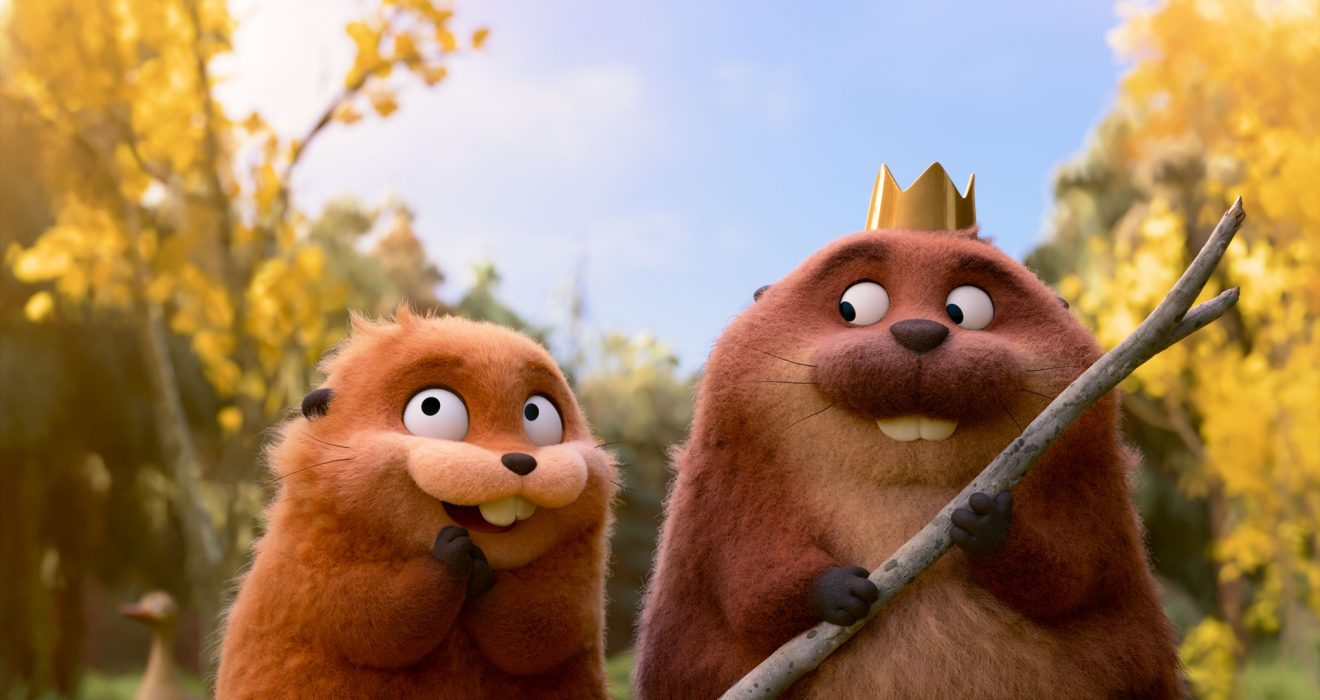
The wheels being spun here seem pretty familiar. Mabel’s exploration of the woodlands has the expected exuberance that comes with first understanding the language of animals. Where the film becomes more intriguing is when she meets a beaver king, King George (Bobby Moynihan), who takes a very easygoing approach to managing a collective of animals that might work together but also still eat each other. The beaver king naturally assumes the human invasion is, well, nature. But the story never presents itself that simply, turning what could’ve been a lost-world adventure ala Ferngully into more of a war of kingdoms.
What made me love Hoppers was the detail and honesty embraced, where other animated films might soften. Rather than presenting a warm, cuddly depiction of nature worth saving, the grotesque aspects of animals mating, munching, and metamorphosing are rarely downplayed. There’s a dark charm to embracing the mammal community’s “pond rules,” which allow you to eat other animals if you’re hungry. The circle of life isn’t just a philosophy poetically delivered by Mufasa for this Disney film; this is an animated movie where George can casually greet a fish he knows by name, watch that fish be eaten, and accept it as nature’s way. The abundance of eaten and squashed wildlife is both amusing and perfectly in tune with the film’s debate about interfering with nature and environmental harmony.
Something that struck me most about this film was a similar sensation carried over from Elio, an effective case for body horror. Elio featured an ode to the planetary replacement clone from The Last Starfighter, presented in a manner that somehow made it even more horrific than that film’s already disturbing portrayal. Hoppers ends with a villain who undergoes a variety of bodily transformations and destruction, ranging from the slimy metamorphosis to the nightmarish scenes of robots ripping off their synthetic skin. Although Elio and Hoppers are familiar on the surface in their sci-fi scenarios, the horror elements are the most potent.
Lest one think this film is near-cynical in its dark humor and dire conflict, there’s some genuine emotion that extends beyond the respect for our natural world. Mabel’s connection with her grandmother is beautiful, and there are some tearful moments of recollection that hit at just the right moment. Finding peace within nature is such a powerful lesson, and it doesn’t come off hokey here, given Grandma’s appeal to a young Mabel’s devotion to animals. That desire for harmony also makes some of the harder resolutions easier to swallow, as Mabel’s journey progresses from being distrustful and rash to confident and collective. When Mabel’s learned declaration of teamwork and trust is questioned for being too fantastical. Her response is inspiring, arguing that the world doesn’t have to be that way if we choose to change it.
Hoppers is Pixar perfection, with empathetic themes, gorgeous animation, and a witty romp that turns what could’ve been a standard environmentalist tale into something more meaningful and hilarious. There’s a good message here that can still feature a bounty of hilarity, more clever and intricate than the expected slapstick in CGI-animated pictures of this ilk. We all live on this planet together, and it’s a heartfelt mantra that rings true enough, despite being posed next to scenes of wildlife being eaten and egotistical politicians. Life is filled with beauty and plenty of absurdity, with Hoppers finding the highest levels of both in a film that lives up to its all-encompassing beliefs.