
“Animal Farm” (2026) Review
Director: Andy Serkis Screenwriter: Nicholas Stoller Cast: Seth Rogen, Gaten Matarazzo, Kieran Culkin, Glenn Close, Laverne Cox, Steve Buscemi, Woody Harrelson, Jim Parsons, Andy Serkis, Kathleen Turner, Iman Vellani Distributor: Angel Studios Running Time: 94 min. MPAA: PG
Kids can handle reading Animal Farm. Sure, it’s a dark book, and children are not going to directly trace the allegory to Stalin’s rise amid World War II, but the framing of a dictatorship through a pig’s hypocritical governance is easy to read. I have faith in kids that they can read and digest that story, that watching it being contorted into a family-friendly animated movie is more than just a gross commercialization of the revered George Orwell book. This is an insult to its young audience, especially for not having the CGI guts to proceed with its radical revisions.
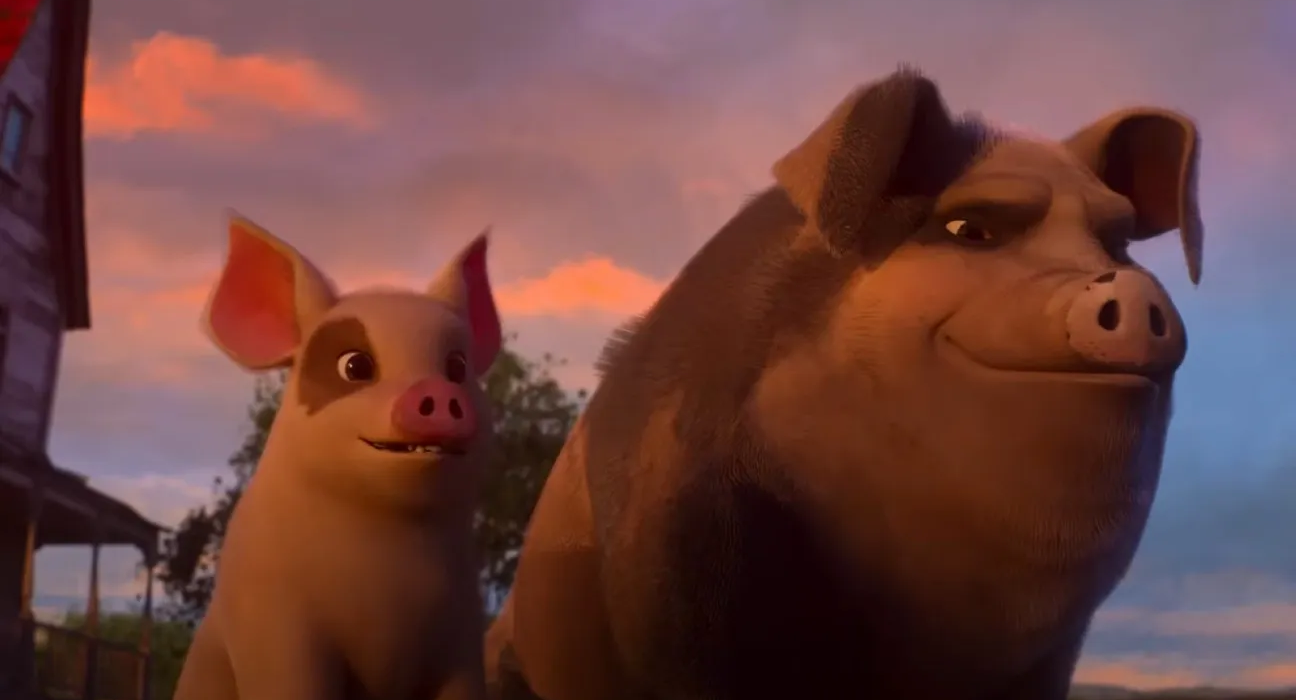
Director Andy Serkis seemed to approach this material with more thought put into the animal antics than allegories. It’s a cartoon with running jokes about repeating sheep, snarky roosters, and farting pigs. Even with familiar characters and quotes from the books, you can feel the kid-friendly sanitization coating the story, where booze is recast as “naughty juice.” After a revolt against the farmer, Jones is portrayed as more comical than revolutionary (complete with a rap song that incorporates Old McDonald into the lyrics), we get the familiar staging of the thoughtful pig Snowball (Laverne Cox) promoting a farm of equality, and the greedy pig Napoleon (Seth Rogen) rewriting those laws. Rather than having children watch the rise and fall of a tyrant, the movie introduces the plucky pig Lucky (Gaten Matarazzo), who points out the obvious inconsistencies in Napoleon’s logic while also being drawn to the perks of pigs in charge. And in case that wasn’t enough, the film is also narrated by the horse Boxer (Woody Harrelson), serving as both the embodiment of the working class and the narrator, which is an odd choice given his fate.
Considering Orwell’s earnestness in his writing, this adaptation is a tonal nightmare. Moments of levity are grossly depicted through ho-hum punchlines and needledrops, sometimes literally gross with Napoleon’s farting while talking about freedom. Even Seth Rogen’s iconic laugh is exhausted to the point where the script mocks it. The music choices are baffling, as when the temptation of grains for selling out is punctuated by the theme song of The Price is Right. Scenes of animals tragically dying off-screen are lessened by pigs partying it up in the farmhouse and playing with cool gadgets. The passages of the book that are quoted run in sharp contrast to the rest of the dialogue, which waters down talk of mankind, greed, and authoritarianism into punchlines most childish.
The biggest crime of the picture is how it shifts the allegory away from communism and into the more modern concern of capitalism. That shift could be interesting if it weren’t pursued in the most tiresome manner and with a hypocritical conclusion. Driving home more of a capitalist critique is the corrupt human CEO, Freida Pilkington (Glenn Close), and her cohort, Whymper (Steve Buscemi). Those familiar with the book will note that Pilkington was one of many farmers Napoleon dealt with, known for being too laid-back and letting his farm suffer. Freida, by comparison, has built a cold, efficient operation for power generation and animal harvesting, where her problems are not the dire state of her land but a lack of money. Oh, how I wanted to see her Cybertruck burst into flames or her AI falter, but there’s no such luck. Freida remains a stock villain, with tech-mogul tantalizations and little else.
Any hopes of a compelling restructuring of the material tumble off a cliff when the film reaches the point where the book ends. After pig and man look no different, Lucky leads his own revolution against Napoleon in a series of silly attempts to make the pig look bad and dismantle his monstrous new dam project. The resulting chase and battle between Lucky and Napoleon is not one of a failed socialist revolution biting back against the monstrous elements of late-stage capitalism, but just a battle between a noble pig and a greedy pig. The movie even doubles down on its messaging, with Lucky stating that the lesson learned is that we should help people because we want to, not because we need to. The fact that Napoleon refused to help the starving animals is written off not as a failure of going against equality, but as just being a case of one bad apple. While the book ended with a warning of unquestioning communist allegiance, the movie ends with the hopeful suggestion that capitalism just has a few more kinks to work out before we can get that faulty equality feature working.
In the same way that Napoleon rewrites the Commandments of Animalism, Andy Serkis has rewritten Animal Farm into a hideous distortion that betrays Orwell’s book. This movie falls back on mere fluff in how it diverges from Orwell’s allegories of communism, while at the same time pulling back on its capitalist critique before something profound is reached. All we’re left with is a film that showcases the wacky stuff animals could do if they controlled a farm, posed in a way that would be a gag on 30 Rock for being such a terrible idea. Kids deserve better than this. Just read the book, kids. It’s not that long of a read, and it’s far more entertaining than this mindless mash of pig and poop jokes.