
“Blue Heron” Review
Director: Sophy Romvari Screenwriter: Sophy Romvari Cast: Eylul Guven, Amy Zimmer, Ádám Tompa, Iringó Réti Distributor: Janus Films Running Time: 90 min. MPAA: Not Rated
We all have hazy memories of childhood that we’ll never be able to fully remember, let alone replicate. This is a vulnerability that writer/director Sophy Romvari takes with her semi-biographical film Blue Heron. She never settles on it as a perfect reflection of her family life in the 1990s, painting the echoes of years we can never return to or fully recall. Although the angle alone would make the film appealing on its surface, the daring to tinker with this subject through meta and surreal elements leaves a far greater emotional impact.
Set in 1990s Canada, the young Sasha (Eylul Guven) is getting used to her new suburban life with her large family. From her eyes, we can see all the problems from a distance. Her mother (Iringó Réti) is stressed by the family’s finances, leading to fights with her dad (Ádám Tompa) when he takes time off work to play with his kids. The full situation is never fully revealed, watching the frustrations from the curious innocence of childhood. Sasha takes more note of her quiet teenager brother, Jeremy (Edik Beddoes). She witnesses moments her parents don’t see, of him stealing and showing small kindness toward his siblings. She also catches glimpses of her parents arguing with Jeremy, where their efforts to shield their children don’t conceal everything. She can see the handcuffs, and it’s clear Jeremy won’t be in this house much longer.
While Sasha’s father favors video recordings of their suburban life, there’s a whiff of uncertainty in how much Sasha remembers. Atmospherically, there is so much that seems familiar for such a childhood. The shuffling of cereal in the plastic containers. The sounds of Looney Tunes coming from the TV on a lazy day. The distant lawnmowers and foreground splashing of a summer day outside. Romvari captures all these little moments in a way that makes us feel like we’ve been here and can connect with Sasha. But the film throws a huge curveball as Sasha ages into adulthood, taking more notice of video recordings and troubled families. In the same way that the movie steps out of time, so does Sasha, meshing into a transmundane field trip into her own past. Without giving away this surprisingly somber revelation, the film feels as though it’s tackling the question of what we would do if we woke up in the 1990s again. The answer delivered is one that feels the most personally honest and emotionally devastating.
There’s a deeply personal, even tragic, manner in which Sophy forces the audience into the same position of questioning our own memories. We’ve all had those thoughts about what we could do if we went back in time and knew better. But what would really do? What would we try to prevent or just experience? Would it make any difference? There are only bits and pieces of Sasha’s history that we’re left with in her position of trying to put the pieces together from her small stature. A close moment with her father has her using MS Paint to draw an animal on the computer, a familiar activity for any household that grew up with a computer. But then there’s the uncomfortable, distant scene of Jeremy being confronted by his dad in his room, glimpsed only from the basement window. Sasha watches her brother thrash in frustration, and her father struggles to console him. You don’t forget moments like that. Or is that what we chose to remember?
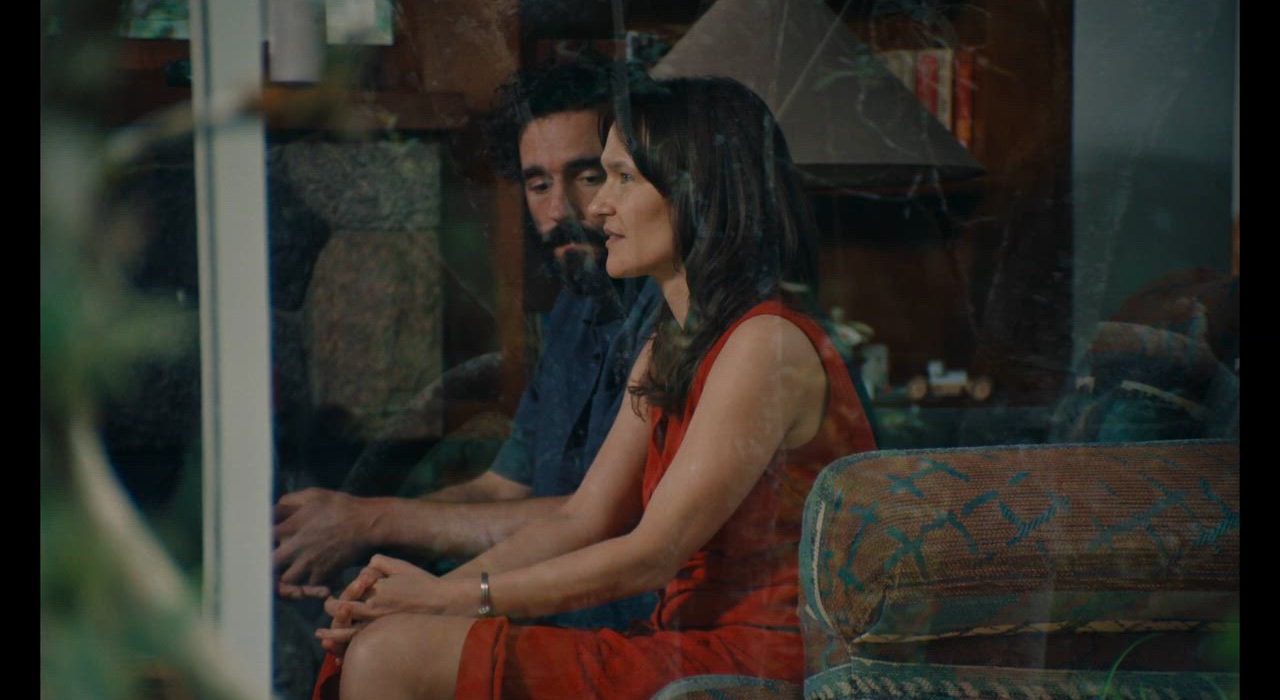
Throughout the movie, there is a maddening mystery with no lucid conclusion. We know the parents are having money problems, but we don’t know many of the details. We know that Jeremy has psychological problems, but we never gain a full perspective of where his problems have led him. All we’re left with is that sensation of internal emotional closure, as an adult Sasha navigates this familiar landscape of unresolved feelings, like a ghost haunting the place where she once lived. Though the film ends with a composition of her thoughts, there is always a lingering tingle about how close it comes to cracking its own fiction as it delves deeper into the personal. The film nearly becomes a form of therapy as Sasha attempts to better understand her parents’ perspective and to shape the words she would speak to her brother.
This is the type of movie that sticks with you for days after seeing it, forcing you to question yourself more, the way Romvari taps into her reflections on the past. The bleeding of filmmaking and nostalgia is presented in a way that never feels indulgent but is always curious to learn the more uncomfortable truths. In the same way that Sasha listens behind closed doors to the family’s arguments, Romvari still feels like she’s doing the same with her movie, composing a narrative from within herself and seeing what personal revelations bubble to the surface. We’re all children still struggling to understand ourselves and the world, with a few moments here and there where we witness new perspectives and come to terms with our cobbled thoughts. Blue Heron is a brilliant exploration of that part of our minds in its meditative nature.