
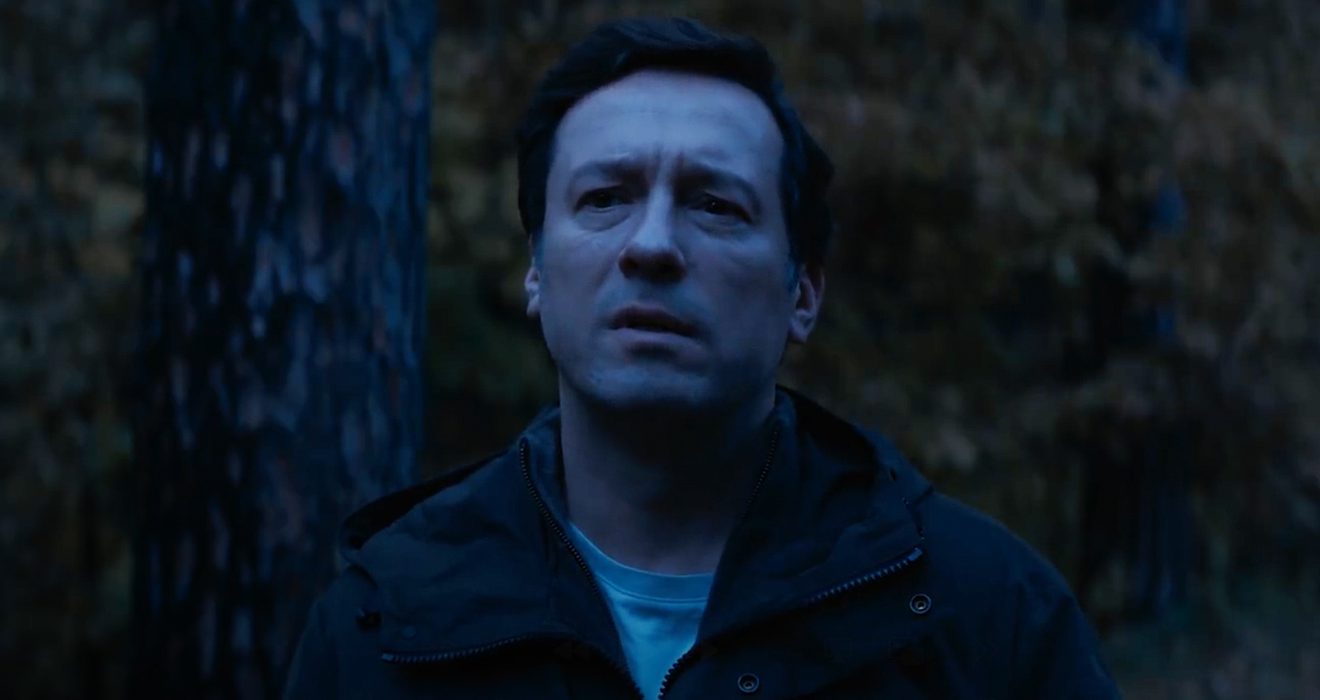
“Minotaur” (2026) Review
Director: Andrey Zvyagintsev Screenwriter: Simon Lyashenko, Andrey Zvyagintsev Cast: Dmitriy Mazurov, Iris Lebedeva, Boris Kudrin, Yuriy Zavalnyouk, Varvara Shmykova Distributor: Mubi Running Time: 142 min. MPAA: Not Rated
In Greek mythology, the Minotaur demanded a tribute of 14 young men and women, who were sacrificed and forced into the inescapable labyrinth. In Andrey Zvyagintsev‘s Minotaur, a modern-day version of this occurs in a small Russian town in 2022. Amid the war in Ukraine, a business executive must choose which of his 14 employees will be drafted into the military. But this isn’t a film where the central conflict revolves around who to choose. Instead, it explores how frightening it is that the choice becomes so easy when justified as survival.
The executive is Gleb (Dmitriy Mazurov), who manages a transport company, and he has far more problems than his worried employees jumping ship. His biggest concern is that his dissatisfied wife, Galina (Iris Lebedeva), may be having an affair. Their highly affluent lifestyle, free from worries of being forced into Russia’s losing war, just isn’t enough for her, as she seeks sexual comfort in an attractive photographer. So, in addition to Gleb secretly arranging for his employees to be sacrificed to the government, he also hires a private investigator to confirm his suspicions. How he handles this revelation creates an incredibly messy situation, made even darker by how easily someone like Gleb can insulate himself from consequences.
Gleb’s hypocrisy is even more hideous in how he interacts with his teenage son (Boris Kudrun). When the issue of a bully comes up, Gleb recommends that his kid stand firm and aggressively threaten the bully with the old collar-grabbing and harsh words. Such tactics might work for the schoolyard, but not in an adult world as corrupt as the one Gleb occupies. Gleb may have the power to threaten somebody like his wife’s lover in private, but will also capitulate to his demanding government in public. His devotion to covering up messes that could ruin his lavish lifestyle distances him from his son, as a highly illegal activity makes Gleb so late for a party that he can’t even be bothered to stay awake. The son doesn’t seem that distressed by his father’s absence or even the bitter boredom of his easily peeved mother. But there’s always that concern about how much the son is absorbing from highly troubled parents who defy each other in more ways than one.
Minotaur is loosely based on the 1969 French thriller The Unfaithful Wife, and while it still focuses on the psychological and erotic tension of a crumbling marriage, it adds a layer of dread by including the Russian-Ukrainian war. The event itself was a primary reason why Zvyagintsev did not return to Russia when he was hospitalized in Germany. In addition to his disgust with Russia, he simply wouldn’t be able to make such a film with an oppressive government silencing any and all dissent. The movie was shot in Latvia instead, but it doesn’t shy away from reflecting Russia’s reality, as Zvyagintsev drew inspiration from a true story about an employer forced to hand over employees for the war effort.
Zvyagintsev conveys not just the anxieties of Russia going to war, but the chilling isolation that wealth can bring in such a state. Gleb can afford a lavish home for his family, but he can’t compensate for the lack of love, as his wife is caught up in an affair and his son keeps his head down on a tablet with headphones. He can afford to take his friends out for a fancy dinner, but there’s still a distance present. Even at work, Gleb keeps an air of secrecy to keep his business running and ensure he’s not the next sacrifice. This is a man who has not only become detached from personal connections, but is encouraged by the state to keep going down this dark path.
Dmitriy Mazurov’s performance as this flawed protagonist works well not just for his secretive nature, but for his pathetic desperation. This is best showcased in his ill-thought-out plan to murder his wife’s lover. The weapon he chooses isn’t clever, his disposal of the body is sloppy, and his method for getting rid of the blood from the crime scene involves lots of paper towels. In a better world, Gleb would be an easy case for a detective, and the two assigned to this case wouldn’t have to dig too deep for the right evidence of this amateur criminal. But in a corrupt Russia, people like Gleb can get away with murder most amateur. And while Gleb might be relieved he won’t be recognized as a murderer, the problems with his wife only deepen, leading to a fantastically emotional performance by Iris Lebedeva that perfectly conveys the frustration and pain she can’t properly confess.
Minotaur masterfully melds affairs both romantic and political into one of the most damning portrayals of Putin’s plundering of Russia’s people. The film has a quiet, haunting quality that is as reflective as it is intriguing. It also ends on one of the most chillingly contemplative shots, giving the audience time to let the gravity of what has transpired sink in. With this framing, Zvyagintsev can convey both the external and internal feelings of Russia’s plight from within, and the anxiety from outside its borders, where you still feel trapped after exiting the labyrinth. You might not be trapped there, but the Minotaur still resides, and he’s still hungry.