
“Once Upon a Time in Harlem” Review
Director: William Greaves, David Greaves Cast: Romare Bearden, Arna Bontemps, Ernest Crichlow Distributor: Neon Running Time: 100 min. MPAA: PG-13
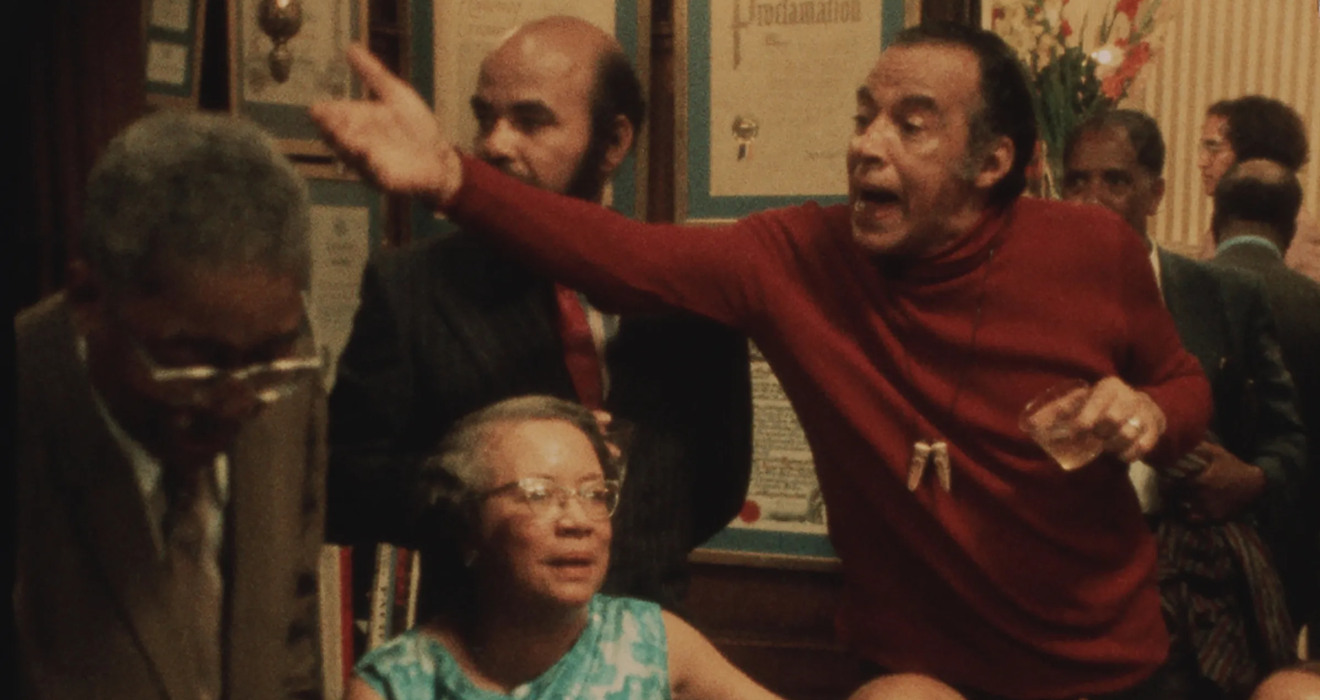
Although it spans time, Once Upon a Time in Harlem feels timeless. It’s a documentary about the Harlem Renaissance, told through the era’s pioneers at a 1972 get-together in Duke Ellington’s home. William Greaves, known for historically important films like Nationtime, filmed this picture but never completed it. Now completed decades later by his son David, we see William place the viewer as a fly on the wall at a party of highly chatty, reflective intellectuals at a formative moment in culture. It’s an incredibly enlightening experience to listen to these artists, poets, writers, and philosophers gather to debate society’s direction and celebrate the necessity of expression that built it.
The many conversations cover a broad range of fascinating subjects. Aaron Douglas experience in painting highlights the importance and passion of art on levels that extend beyond representation. Lee Whipper, founder of the Negro Actors Guild, delves into the landscape of cinema’s early days and the tone for black actors breaking through the medium. The film brings together many unique figures, from the poet Arna Bontemps to the socialist Richard B. Moore. The atmosphere at this gathering feels easy, shifting between catching up with old friends and engaging in illuminating cultural discussions. That inviting energy keeps these figures from getting stuck in the past they remember most fondly. After all, these were people who helped reshape culture, and it’s impossible not to notice how much has changed since the 1970s. Has society gotten better or worse since the Harlem Renaissance? That’s an interesting question with no consensus, given the many different perspectives.
Such a historic event has a relatable tone for anyone who’s been to a party with artistic and politically astute pals who get really into their passions between drinks. Sometimes the topics are engaging enough that you want to chime in, as I found myself leaning forward in the discussion of journalistic integrity. Other times you just want to sit back and listen intently to debates about how much progress has been made in civil rights. Not everybody is content to nod along with each other, as there are some highly spirited opinions floating around in these sage minds. Yet a knowing connection runs through these discussions, recognizing the interrogation of ideas rather than the assassination of character. It’s unlikely these folks will jump into a fistfight over which politician was the worst.
If these candid moments feel a little overwhelming, the film is directed in a way that expands on the work of these intellectuals. Just as one might retreat to a corner to familiarize themselves with someone’s work on their smartphone, the film includes breaks that reveal the historically relevent art of this movement. Paintings are showcased with wise words of inspiration from the artists, and photographs of the era bring the many old stories to life. The poetry is especially powerful because it is so beautifully woven into the archival footage. Jumping from those brief flashes of brilliance back into conversation makes these many minds feel more real than godlike, offering more inspiration than intimidation.
I would say the film has the perfect atmosphere for feeling like a guest at a party of powerful intellectuals, but it ends up being even better than that. A genius editing choice comes in the form of overlapping shots and conversations, splitting the screen between various perspectives at the party. This lets the film get up close and personal with its subjects without making you feel like you’re missing out on another corner of the celebration. It’s an experience that feels even more immersive than merely snagging a chair and absorbing the rich atmosphere of powerful thoughts zooming around Ellington’s old walls and bouncing off the creaky wood floors.
For covering so much ground, Once Upon a Time in Harlem delivers an all-encompassing euphoria of time’s passage and the value of enduring ideas and expressions. This film offers so much to think about as it moves through its many conversations. Perhaps the most intriguing angle is how well the film captures these pioneers of the Harlem Renaissance. They had time to think about important and personal issues around race, politics, and art. You have to wonder what they would discuss in today’s climate if they were still around, and how much of it William Greaves could capture so well. Clothing and media might’ve shifted since, but the philosophical perspectives and vibrant discussions have aged like fine wine, inviting the audience to pour a glass and enjoy this intellectually stimulating party.