
“Godzilla Minus Zero” Review
Director: Takashi Yamazaki Screenwriter: Takashi Yamazaki Cast: Ryunosuke Kamiki, Minami Hamabe, Min Tanaka, Hidetaka Yoshioka, Masami Nagasawa, Yuki Yamada, Kuranosuke Sasaki, Jun Kunimura, Sakura Ando, Miou Tanaka Distributor: GKIDS Running Time: 135 min. MPAA: R
It must be hard to follow up on Godzilla Minus One, one of the most refreshing Godzilla movies in recent years, as both a thrilling monster movie and a meaningful commentary on Japanese post-war anxieties. Even with this pressure, director Takashi Yamazaki still returned to take on that challenge with Godzilla Minus Zero. While it doesn’t match the emotional heft of the previous film, it still stands as a decent sequel and an above-average Godzilla film.
The film hits the ground running with the giant monster King Ghidorah already on the rampage. With a new kaiju threat to the country, the surviving characters of the last film return to tackle this tough situation once more. The pilot Kōichi (Ryunosuke Kamiki), who rejected his kamikaze mission and stopped Godzilla previously, is called upon to once again brave the skies, made all the more dangerous by a winged monster on the loose. His wife, Noriko (Minami Hamabe), also joins the fight and plays a more pivotal role beyond caring for their young daughter, Akiko. And there’s the curly-haired director Kenji Noda (Hidetaka Yoshioka), leading his department in stopping disasters across Japan. They all have to work together to stop King Ghidorah, and, naturally, it will involve pitting this new threat against Godzilla.
This film runs dangerously close to being the inverse of Minus One. While that film leaned heavily on its human element, its sequel focuses on the monster. Most of the dialogue focuses on characters devising the best strategy to stop Ghidorah and draw out Godzilla. The human element is lessened this time, and you can see how watered down it becomes in the new additions to the cast. Noda receives some extra help from the meteorologist Makoto Aoyama (Masami Nagasawa), but she’s strictly business. She adds her weather insight without much rancor from the disaster team or a genuine connection with the assertive Noda. The only interesting inclusion is the biologist, Kanji Murakami (Min Tanaka). Having lost his family during the bombing of Hiroshima, he holds a grudge against the American forces working alongside the Japanese forces stopping Ghidorah. Perhaps if his research could manipulate Godzilla into fighting Ghidorah, it could also be used against the United States.
The human characters still have intriguing elements, but their plight feels less explored this time around. Kōichi is still bitter that his fight never ends, and the pilots he works alongside resent the Japanese government for letting them down. But aside from a few passing remarks and brief outbursts of frustration, the commentary never goes much further. Akiko is worried about her parents not returning, as she is friends with many war orphans whose parents didn’t come back. While it does include sad scenes of Akiko crying and begging her parents to stay, there isn’t much beyond her tears and adults trying to dry them with brief tips on saying goodbye.
The R rating this film earned comes from the more gruesome violence of highlighting the devastation of Hiroshima and the potential of Godzilla obliterating New York City. Again, this feels more like a dash of darkness than the dollop we got in the last film that was better woven into the chaos. But it’s not just that the focus on the giant monster steals from a more human story; it also mutates it, quite literally in one case. We learn how Godzilla’s cells regenerate and how they might’ve rubbed off on other humans. While this development does explain how one character survived Godzilla’s previous assault, it also undermines the thematic resonance of the last movie. Humanity’s resilience amid conflict just doesn’t carry the same emotional appeal when the next film gives it a scientific explanation. And the American forces thrown into the mix are little more than the conniving forces bordering on cartoonish for not wanting to help Japan too much, an ambition that feels present but also lacking.
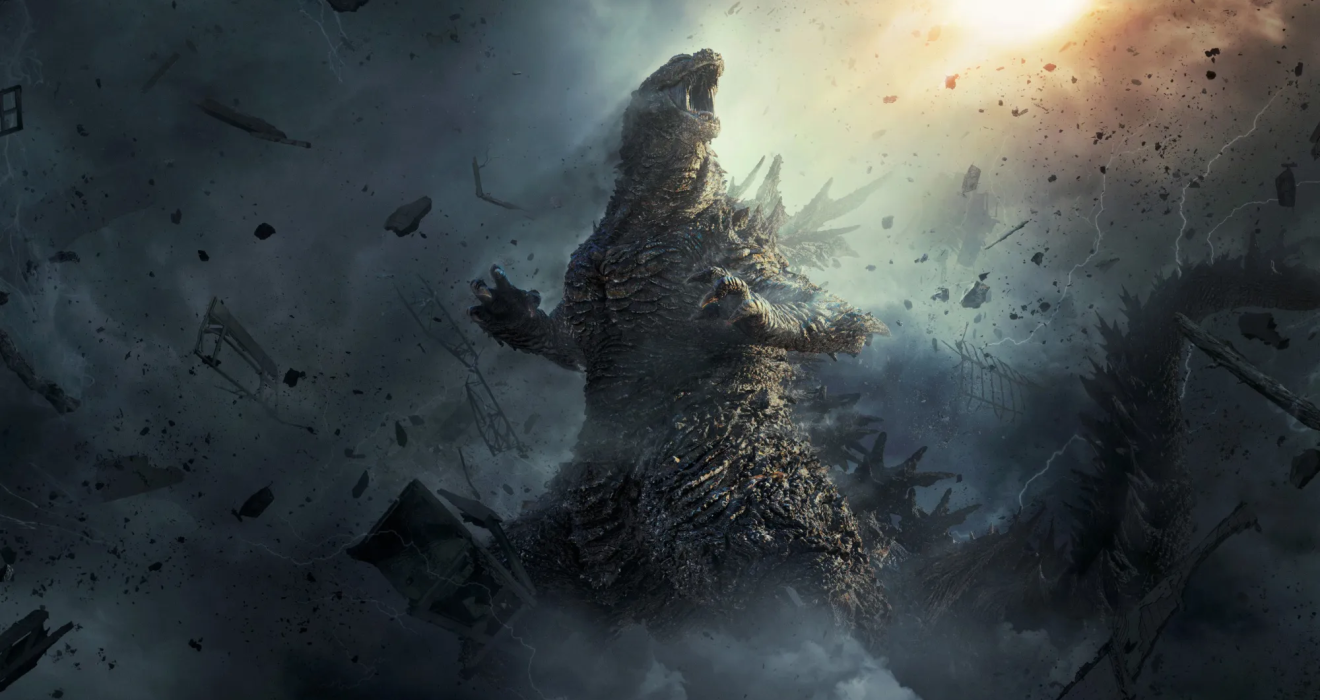
But where the film makes up for its lack of story and human characters, it recovers with a solid dose of kaiju carnage ripping through Japan. Minus Zero leans hard into this battle of monsters, letting their theme songs play like entrance music in a wrestling match. You hear those dramatic strings and Ghidorah taking flight. You hear those triumphant horns, and Godzilla will be marching onto the scene. The finale delivers on the expected bout between them, featuring plenty of Godzilla’s atomic breath and Ghidorah’s many heads chomping down on Godzilla’s flesh. With Godzilla’s healing and Ghidorah’s ability to absorb the traits of organic life, their fight is very exciting, even if they’re duking it out within an already decimated city. The visual effects are impressive, not just for the monsters’ look and animation but for the detail in their destruction. The horrific nature of how King Ghidorah lifts people and buildings into the air only to drop them is devastating in establishing this creature as a threat to humanity and not just an opponent for Japan’s home team kaiju.
The appeal of this film will ultimately come down to how big of a Godzilla fan you are. If watching highly expressive and well-rendered versions of Godzilla and King Ghidorah brutalizing each other is all you need, this film delivers on those expected thrills of this franchise. There are even some nice monster movie cameos peppered into some scenes, with appearances by directors Hideaki Anno and Jordan Vogt-Roberts. But if you’re somebody who just started getting into Godzilla because of how thoughtful the story was in Godzilla Minus One, you might be let down this time around. Familiar Godzilla tropes metastasize here, and the human element, while still compelling, moves to the back seat as the saga progresses.
Minus Zero is still an entertaining Godzilla movie, even if it doesn’t measure up to the entertaining girth of the previous film. Yamazaki’s direction still has some teeth in how it uses Godzilla to highlight the many complex feelings of a shifting Japan following World War II. Those pangs still land, even if they come packaged in a smaller box for this bigger film. It’s still impressive how Yamazaki charges ahead with more fully realized humans in his films and never loses sight of the greater appeal of a Godzilla movie. It’s one of the better Godzilla films, but compared to the more thoughtful writing in Shin Godzilla and Godzilla Minus One, it doesn’t have the same bite, despite the exciting shot of King Ghidorah biting off Godzilla’s arm.