
“The Perfect Neighbor” Review
Director: Geeta Gandbhir Distributor: Netflix Running Time: 96 min. MPAA: R
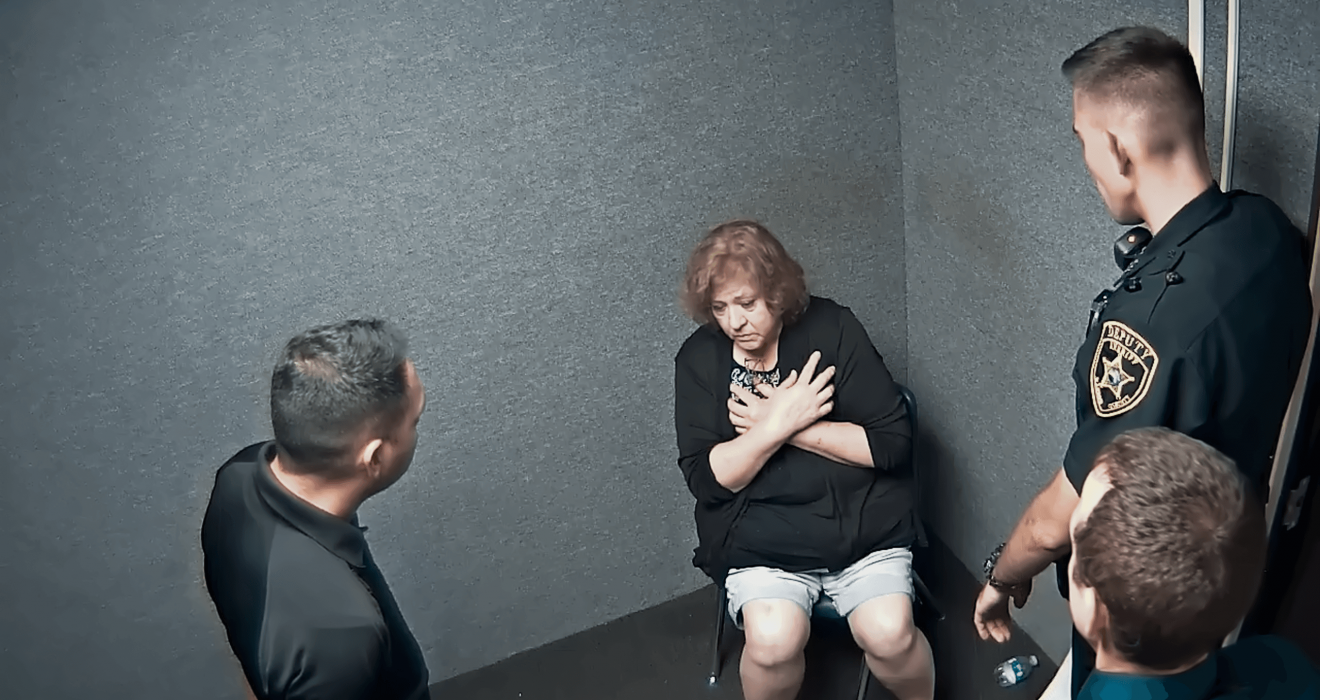
“I can’t do this. I’m sorry.” These are the words Susan Lorincz keeps repeating to the police inside an interrogation room. This is her repeated response when being told that she is being arrested for manslaughter. Before she was told this, she was given a pen and paper to write a response to the family of the mother she had killed. All she was able to write was that she was sorry she shot and killed somebody, her only excuse being fear.
The Perfect Neighbor is a documentary that covers the events leading up to and after Susan Lorincz shot and killed Ajike Owens. Revealed through bodycam footage, doorbell camera footage, smartphone-recorded videos, and news reports, Susan is the one neighbor whom no one liked in Ocala, Florida. Protective and isolated, she is easily infuriated with the neighborhood children who play outside. Angered by their antics and antagonism, Susan would resort to either calling the cops or yelling at the children with slurs both abelist and racial. When the cops respond, they try to approach diplomatically, telling the kids to lay off the old lady and for Susan to just let the kids be kids. While the children agree, Susan lets out a bitter sigh, hoping the cops would do more. This is a woman that nobody would feel safe around, given that she is later questioned about her racial slurs and writes them off as mere slang for being dirty.
But Susan is revealed to be violently irrational even before she fires a gun. Prior to the tragic incident, police responded to an incident where she rammed a pickup truck into the sign of an auto repair location. When approached about this property damage, Susan initially lies about her actions and then panics, stating she was scared and unsure what to do. Susan is not just the paranoid neighbor who calls the cops on the neighborhood kids for being too noisy; she’s also the dangerous type who shoots first and makes excuses later. Her fatal mistake brought about the most heartbreaking of moments for a community. Ajike’s son is questioned after the shooting. Equally horrified and saddened, he is asked if he was hurt amid the shooting. He responds, “No, but my heart is broken.”
The crime seems pretty clear from the events described by the witnesses and Susan herself. After arguing with Ajike’s son over a left-behind tablet on her property, Ajike confronted Susan by banging on her door. Susan’s response was to grab her gun and shoot Ajike through the door. There was no justification for this death. Yet, Florida is one of many states with the stand-your-ground law, permitting citizens to use deadly force if they feel they are under attack. While this law does not let Susan off the hook, it does slow the process of arresting her for the unlawful death of a mother. The Florida sheriff initially says he understands Susan’s anger toward children, implying they may be at fault. It was only through a furious community response and an intricate trial that Susan was sent to prison for her crime.
With no talking heads and raw footage, director Geeta Gandbhir genuinely captures the tragedy that led to tearful kids without a mother and parents fuming with rage for their neighborhood menace turned murderer. Susan Lorincz’s bitterness and paranoia poisoned her mind to a degree that she can’t even make sense of the idea that she’s going to be arrested for her actions, even when having her hand held by the most patient of detectives. It doesn’t matter how much more there is to her story when her violent outburst devastated a community and required an uproar for any conviction. The stand-your-ground law is dumb, and The Perfect Neighbor should be Exhibit A.


