
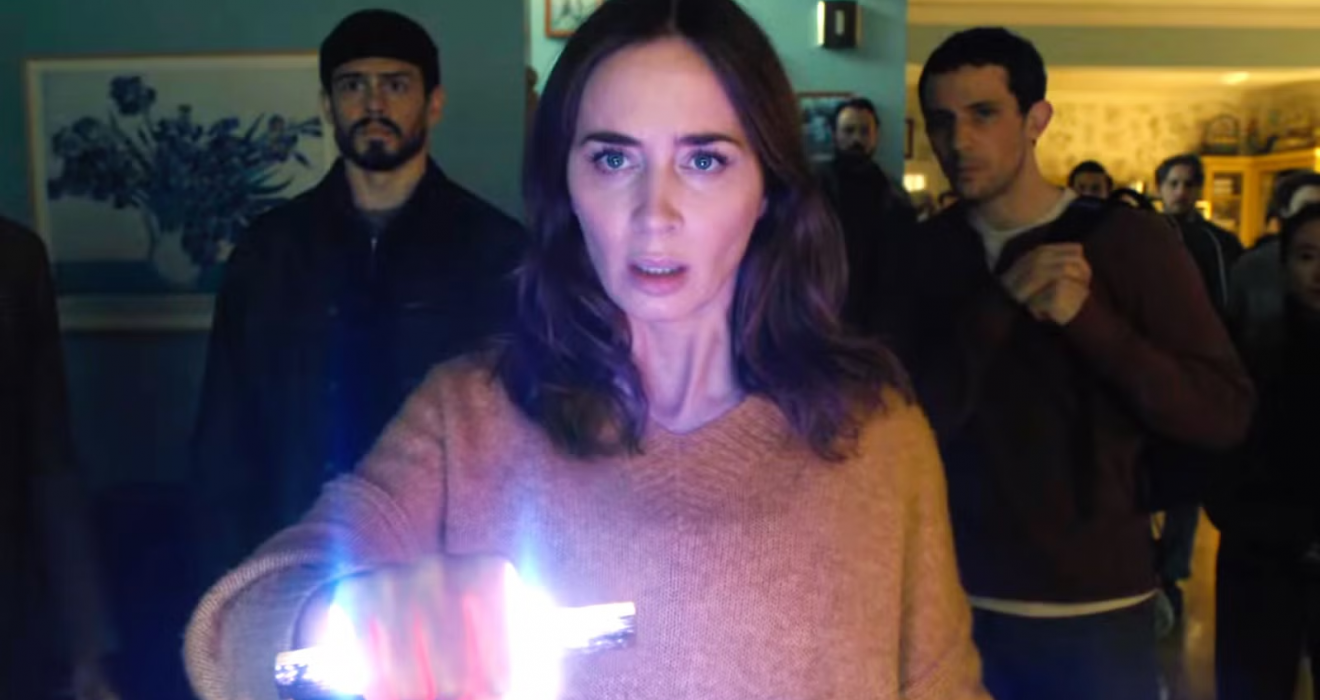
“Disclosure Day” Review
Director: Steven Spielberg Screenwriter: David Koepp Cast: Emily Blunt, Josh O'Connor, Colin Firth, Eve Hewson, Colman Domingo Distributor: Universal Pictures Running Time: 145 min. MPAA: PG-13
Steven Spielberg has directed some of the most hopeful and profound science fiction, some of which were about aliens that want to talk rather than conquer. Disclosure Day is very much that type of Spielberg film, placing it among the ranks of Close Encounters of the Third Kind and E.T. Even though this latest entry doesn’t quite match the same level of comfy charisma, its big ideas are admirable for what is essentially a conspiracy theory that leans more towards a humanistic and heartfelt revelation.
The unexplained becomes a rousing element in Spielberg’s story, screenwritten by David Koepp, that we get the thrill of being dropped right into an intricate plot. We don’t know much about Daniel Kellner (Josh O’Connor) other than that he’s targeted by a group of dangerous men led by the cruel Noah Scanlon (Colin Firth). We don’t know why Kansas City weather reporter Margaret Fairchild (Emily Blunt) starts speaking Russian out of the blue, but it does have something to do with a bird she saw. We don’t know why the lying-low Hugo Wakefield (Colman Domingo) is building what looks like a house, but it must be important considering all the crucial phone calls he is making. All of it amounts to a well-kept secret of aliens that could mean the difference between the world obliterating itself in World War III or evolving as a species.
The movie has the behavior of somebody with a secret they’re trying not to spill, but can’t help themselves and just has to divulge. If the first act was a progressive drip of the mysterious, the second act spells out the complexities in a digestible way that no audience can misinterpret. Daniel’s girlfriend, Jane (Eve Hewson), serves her purpose as a former nun questioning her spirituality amid revelations from the stars. Her paranoia is perfectly preyed upon by someone as manipulative as Noah, but her faith can be easily restored with the sage words of Sister Maura (Elizabeth Marvel). Thematically, she’s an essential character, but feels more like a vessel for how she hits the ground running in this story. The same can be said for Margaret’s boyfriend Jackson (Wyatt Russell), serving up only a mild dose of comic relief to the strange happenings.
At the core of the picture is a need for empathy, perfectly conveyed through Margaret’s newfound ability to speak every language and peer into everybody’s mind. Armed with such amazing talent, she effortlessly drops into conversations of unresolved family matters and breakdowns in communications. This is an incredible discovery, but one that Margaret can’t take much wonderment in exploring, what with a nasty cybersecurity agency pursuing her with a handful of exciting car chases. She learns while running how to effortlessly break down any human she encounters into more of an individual than an asset. At one point, she essentially speed-runs her psychic therapy technique to make her way through an entire security force. This is a movie that tries to do so much that it ends up stumbling and reducing itself to get all of its grand ambitions onto the screen in under three hours.
Thankfully, even amid the over-explaining in the second act, there are some genuinely touching moments where the characters are given room to breathe amid the many expositional dumps. The connection that Margaret and Daniel form when they finally meet is sweet, for how they literally have their own language and can understand each other’s plight. Margaret spends the bulk of the movie so uncertain and frantic about her powers that it’s comforting to see Daniel calm her amid a panic attack. Of course, it helps to have a mesmerizing score by John Williams and some unique special effects involving alien communication devices and invisibility. It shouldn’t surprise anybody that by the third act, Spielberg delivers on his promise of aliens, but builds up enough humanity so that when the truth comes out, it means so much more than some episodes of The X-Files being astute.
There’s a tightrope walk of wonder and philosophy in how Spielberg crafts a movie that can be as contemplative as it is thrilling. An earnest appeal to human connection does go down a little smoother when characters are narrowly avoiding being hit by trains. Part of me wanted to see more of that lived-in quality with the characters, an aspect that is usually a Spielberg strength. The ideas get the front seat this time, and while that is a tad disheartening, it also makes the conversation more direct than aloof. The narrative is still careful about keeping the anxiety of World War III in the background rather than delving into specifics. The focus on communication, particularly the final act, when it turns into a broadcast-news drama, is never lost in a film that begs us to listen to each other without coming off hokey.
Disclosure Day may not be Spielberg’s best alien movie, but it does offer the most humanity and thought amid its conspiracy-theory thrills. Despite the many times the film has to slow down and spell out the connections, the unmistakable appeal of connecting with each other before we connect with the cosmos does make for an intriguing film. It might be lacking in a few Spielberg hallmarks here and there, but it also doesn’t trip down the steep stairs of sanctimoniousness in its universal messaging. What it holds in the highest regard might be the hope that there’s something better over the horizon, even amid all the turmoil. That might be a hard sight to behold in our world now, but Spielberg’s film makes that desire for peace not only seem tantalizing but also within our grasp. And we could all use a little sentimental balm of a movie like this one to combat the mindlessness and meanness of our world and media.




