
“Backrooms” Review
Director: Kane Parsons Screenwriter: Will Soodik Cast: Chiwetel Ejiofor, Renate Reinsve, Mark Duplass, Finn Bennett, Lukita Maxwell Distributor: A24 Running Time: 110 min. MPAA: R
As a 20-year-old director, Kane Parsons incredibly taps into the dangers of memory and nostalgia in Backrooms. He understands the greater terror within the spooky concept of liminal spaces, which extends far beyond empty, spooky office spaces. Many would dismiss the terror of these spaces as some weird aversion to architecture, indecipherable within the commonality of the texture and the low hum of familiar fluorescent lighting. The incongruity of these interiors isn’t as scary as the psychological significance placed behind them.
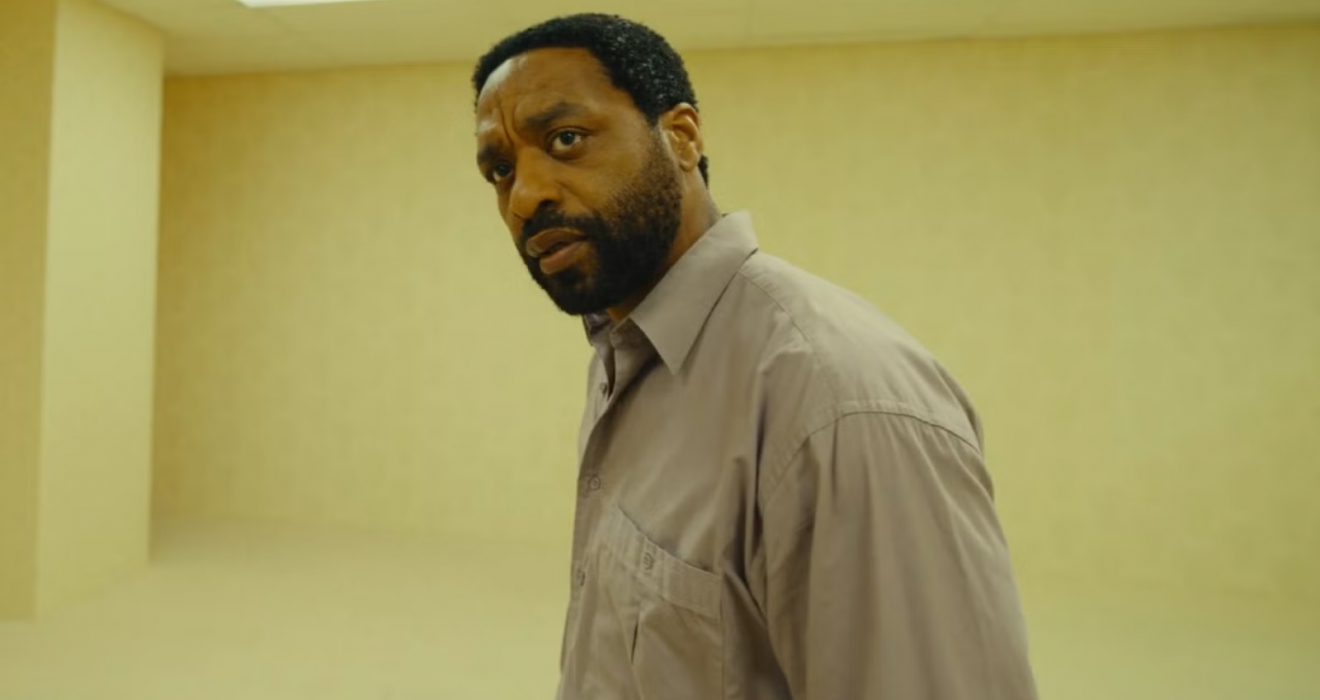
The film mostly follows two people in the 1990s as they lose everything. Clark (Chiwetel Ejiofor) is a drunk who lost his wife and house and now resides in his failing furniture store. He tries to address his feelings to his therapist, Mary Kline (Renate Reinsve), but she has her own problems with the loss of her childhood home to a new development. As Clark attends to his quiet and spacious grave of beds he can’t sell, he stumbles upon a hidden portal in the basement. The portal takes him to what seems like an endless maze of carpet, wallpaper, and randomly placed furniture. At first, Clark assumes it was an abandoned office space, but the further he explores, the more strange this place becomes, beyond the mysterious monster stomping around corners.
Traversing these rooms would be creepy enough because of the odd design of narrow hallways, small doors, and strange additions like pools and pits. There’s some found-footage allure to how Clark convinces his apathetic employees (Finn Bennett, Lukita Maxwell) to help document this expedition. The revelations, however, turn out to be far more than just a spooky splash of poorly designed office space. There are remnants of the past and structures that reflect the familiar, yet do not resemble anything believable. The rooms are littered with everything, from heaps of tattered clothing to a backward stop sign to an ill-placed Christmas tree. Nobody could live here or set up an ideal office space for their business. They don’t need us to exist and we do not belong in these places, making it all the more terrifying to get lose in this maze.
Clark becomes obsessed with the backrooms for more than just the infinite layout that he’ll never finish mapping. After much exploration, he figures out that this realm is a distortion of memories. Everything that ever was is replicated in a way that feels off, never quite looking right, as chairs phase through the floor and doors are improperly placed. If the recalled past can appear differently, maybe all of our memories can be changed. Maybe Clark doesn’t have to see himself as the alcoholic who lost his wife, but was actually in the right for his behavior. Within the backrooms, that lie seems more real in a place where the walls don’t look quite right. It’s a dangerous dose of nostalgia that Mary can only escape by embracing the real and, in one case, using a tactile piece of her history against the monstrous replications.
There’s an obvious association that the film shares with artificial intelligence, even if it wasn’t intentional. The backrooms don’t so much create as they draw from everything that has come before, but presented in a haze of inaccuracies. AI has been used on social media to generate images that make the 1990s seem wondrous, often getting it wrong with era-inappropriate pop culture references. A millennial might recognize these inaccuracies, but someone from Gen-Z might not. The AI images built for nostalgia are not recollections of history but echoes of a time long since faded from reality. This retreat into the mess of our memories is appealing when it seems like everything else has been ripped from us. In the backrooms, Clark can have the home he wants, even if the architecture doesn’t get the kitchen just right. It’s a temptation that Mary might indulge in as well, if not for witnessing the true horrors of becoming lost in this Xeroxed underworld of paper jams and low ink.
That essential element of addressing our corrupted nostalgia is what makes Backrooms more compelling than just trying to figure out how it all works. Despite the scientist Phil’s (Mark Duplass) devoted research, the many rooms will likely never end or be fully understood. It is a nightmare of never-ending developments cobbled from the data of our minds, tantalizing for the control it offers in never creating. As Clark tries to describe the appeal of such a location, he calls it “everything that ever was and everything that ever will be.” It’s that chilling sensation that there is nothing left for us in the future, and the existential dread that these mutated monuments to the mundane don’t require occupancy to exist, given that this dimension can also replicate people.
Backrooms presents one of the most vivid movie nightmares, as psychologically intriguing as it is visually disorienting. Parsons’ direction not only makes these strange rooms feel wholly unique but also directs Ejiofor and Reinsve in a way that makes their terror feel more genuine than usual. He’s careful not to let the characters blend into the intoxicating design, given their importance in addressing the emptiness of this labyrinth, generated by the waste of our deepest fears and the desire to remove the worst of our past. That thoughtful nature makes the elaborate staging of liminal spaces all the more frightening, admirable for far more than the devotion to a haunted house of carpet, wallpaper, and fluorescent lights.




