
“Spider-Man: Brand New Day” Review
Director: Destin Daniel Cretton Screenwriter: Chris McKenna, Erik Sommers Cast: Tom Holland, Zendaya, Sadie Sink, Jacob Batalon, Jon Bernthal, Tramell Tillman, Michael Mando, Mark Ruffalo Distributor: Sony Pictures Releasing Running Time: 145 min.. MPAA: PG-13
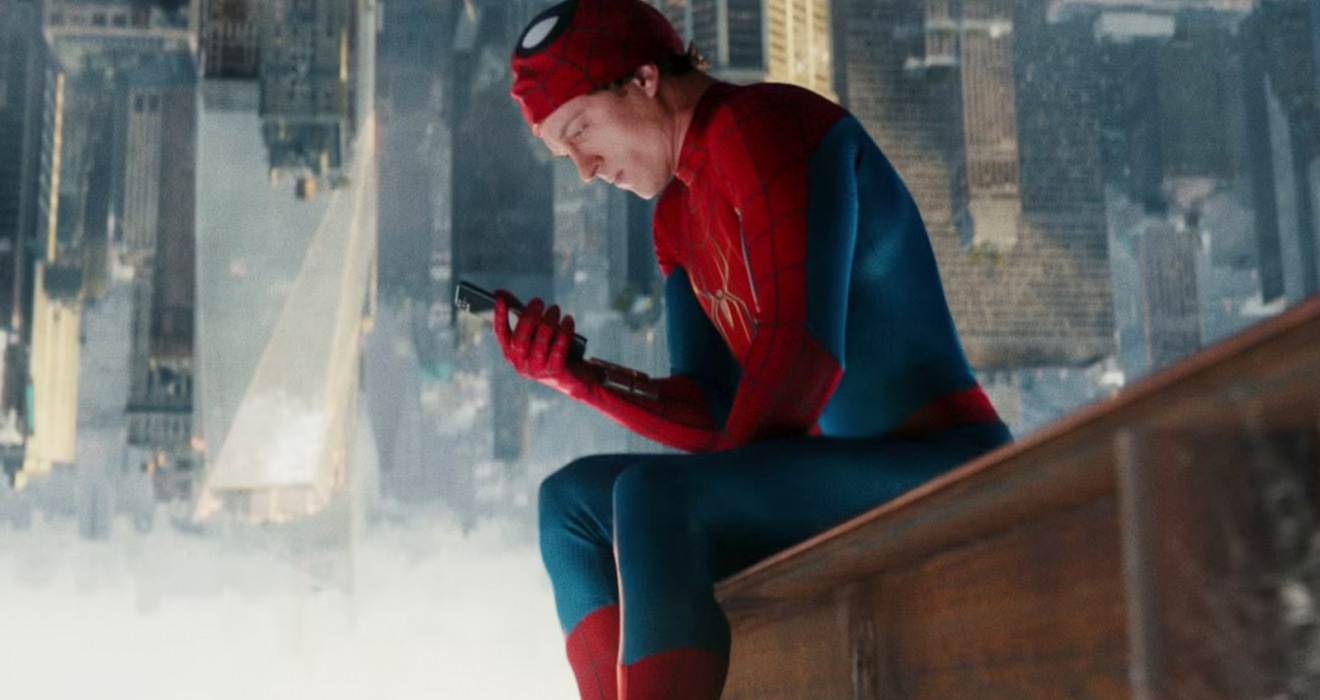
Amid the crowded Marvel Cinematic Universe, it can be tough to wedge in the simpler charm of Spider-Man. Peter Parker (Tom Holland) might tag in for civil and galactic threats within the realm of superheroes, but he’s most at home as the masked New Yorker fighting crime on the street. Brand New Day not only places the web-slinging superhero back in his element but also adds a more intriguing thematic edge alongside its expected action, villains, and interconnected comic book elements.
Peter’s story becomes more compelling in the way it frames him less as a superhero trying to maintain a secret identity and more as a monster in exile. Aiming not to get anybody else caught in his dangerous web, he favors a lonely life of fighting street crime alone. Aside from passing correspondence with police, Peter mostly keeps to himself. There’s more of an incentive to keep a distance this time around as his arachnid powers are taking greater hold of his body. This means far more than just Spider-Man being able to shoot web more organically, rather than relying on his web-shooter devices. The very identity of Spider-Man becomes something he grapples with, overtaking what made him Peter Parker.
While Peter does try and fail to keep his distance from his childhood friend Ned (Jacob Batalon) and once-girlfriend MJ (Zendaya), he’s not entirely alone in his vigilantism. He willingly works alongside the capitulating detective Jean (Liza Colón-Zayas) and reluctantly interacts with the more violent anti-hero Frank “Punisher” Castle (Jon Bernthal). Even with this help, Peter still overworks himself, taking on too much that his body can’t take. It’s a damaging path where even the wise words of Bruce “Hulk” Banner (Mark Ruffalo) are misread more as concerns about locking up monsters than as an effort to come to terms with their abilities. The adventure becomes less about finding the scientific solution and more about the mental anxieties of masking, made all the more vocal when the film’s true villain is revealed.
Peter’s psychological struggle is surprising for how well it holds up against much of the MCU set dressing, keeping everything connected. While not bogged down in Easter eggs and foreshadowing, you can still feel that set for Avengers: Doomsday being built in the background with the inclusions. You can practically see the descriptor box appearing in the corner the same way a comic book would reference which issues to read to understand the citation. The good news is that you don’t have to bone up on your Punisher appearances to appreciate the banter he has with Spider-Man. The chemistry between the two is so good for feeling less like superhero banter between exposition and more like two New Yorkers that can’t help but bark the loudest in an argument.
Directing duties for this latest Spider-Man movie have been turned over from Jon Watts to Destin Daniel Cretton, which doesn’t feel like a huge jump given he previously directed the MCU’s Shang-Chi and the Legend of the Ten Rings. Cretton’s direction of action choreography is exciting for how he makes great use of environments and a variety of weapons. It’s not too surprising that he wraps in some martial arts and swordplay with the inclusion of the assassin group The Hand. It’s a nice break from Spider-Man’s usual bouts of disarming gun-toting gangsters or trying to dismantle the blunt tail of Scorpion (Michael Mando) that slams him into cars. It was also refreshing to watch how he disarms Peter as he tries to figure out his changing body and an intricate puzzle of a villain kept deep in the shadows.
The most frustrating aspect of the film is, unfortunately, one that plagues many Marvel Studios productions. The first act stumbles quite a bit in its attempts to both set the stage for Peter Parker’s placement in the MCU and lay the groundwork for the mystery he has to solve. Even after all the exposition of Spider-Man’s interactions with fellow heroes and officials, there comes a point when the many twists and revelations become more evident, leading to a waiting game to see how long it takes Peter to connect the dots. The good news is that the in-between moments of emotional honesty work well with Holland’s performance. There are some tearful admissions and amusing debates that strike a better balance than feeling like a cold switch between Peter’s darkness and dorkiness. Forming a more mature version of the character after the past few movies requires some earnest character growth, and Holland mostly pulls it off, even with all the weight of a toppling superhero story that at times feels too much.
Something I wish was given more life in this movie is an aspect of psychological and social horror that is just begging to come out and play. There’s a clear allegory to neurodivergence in how Spider-Man comes to terms with his advancing, seemingly uncontrollable powers. As in many depictions of Superman, there’s a scene in which Spider-Man experiences sensory overload, unable to process the world around him, not unlike the sensitivities in autism. The association with autism for such a development becomes even more overt when Spider-Man’s solution to this problem involves altering his DNA, a theory that draws an important moral concern from Bruce Banner and harkens to the autism cure debate. There is a greater horror present in this perception of the ills of wanting to cure differences rather than accommodate them. While it was interesting to see how the film arrives at a satisfying thesis on this angle, it also feels like there’s some untapped potential in a film that crams in so many characters, events, and cinematic connective tissue within 2.5 hours. That said, it’s heartwarming that the relatable underdog element of Spider-Man will connect more directly with a neurodivergent audience, requiring less squinting and theorizing to find its reflective appeal.
Brand New Day lives up to its title as a Spider-Man movie that can mature beyond an expanding roster of heroes/villains and cooler fight scenes. It’s dark without feeling like a brutal tonal shift, somber without feeling like subpar superhero melodrama, and charming without feeling like it’s meeting an obligatory quota for quips. There’s a very satisfying moment towards the end of the film that echoes a similar sentiment in Across the Spider-Verse, where the hero defies not only the odds, but the labels placed on his character. It’s a reassuring inclusion that superheroes can grow rather than remain the same for the sake of canon or status quo. For all its overstuffing at times, the meaty thematic core and emotional drive rarely ring hollow in this picture, navigating the noise as bravely as Peter Parker zips through the bustling New York skyline. It’s pretty cool that such resonance can be found in a movie where Spider-Man fights some ninjas.




